Want to make a difference? Join our monthly newsletter and stay updated on our latest projects, success stories, and opportunities to support our work.
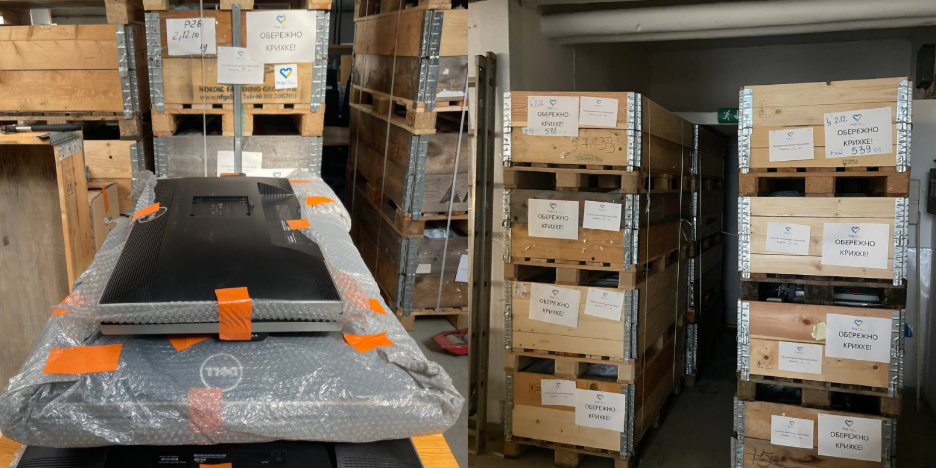
Last week, our team and volunteers came together at the warehouse to pack a large donation of monitors as humanitarian aid. It took a full afternoon of hands-on work to get everything sorted, boxed, and ready to go. The donation was made possible thanks to our friends at HiQ Gothenburg.
Very soon, these monitors will travel thousands of kilometres to Ukraine, to reach the people and organizations who rely on this kind of equipment every day.
Support like this shows what it means when businesses choose to stand with Ukraine, not just in words, but in action. Choosing to contribute, share resources and stand with people affected by the war is one of the ways the private sector can make a real difference. We at HUG are happy to be part of this effort.💙💛
Thank you to HiQ Gothenburg, for your trust and generosity. And a special thank you to our incredible volunteers who helped us pack and prepare the monitors for their journey.
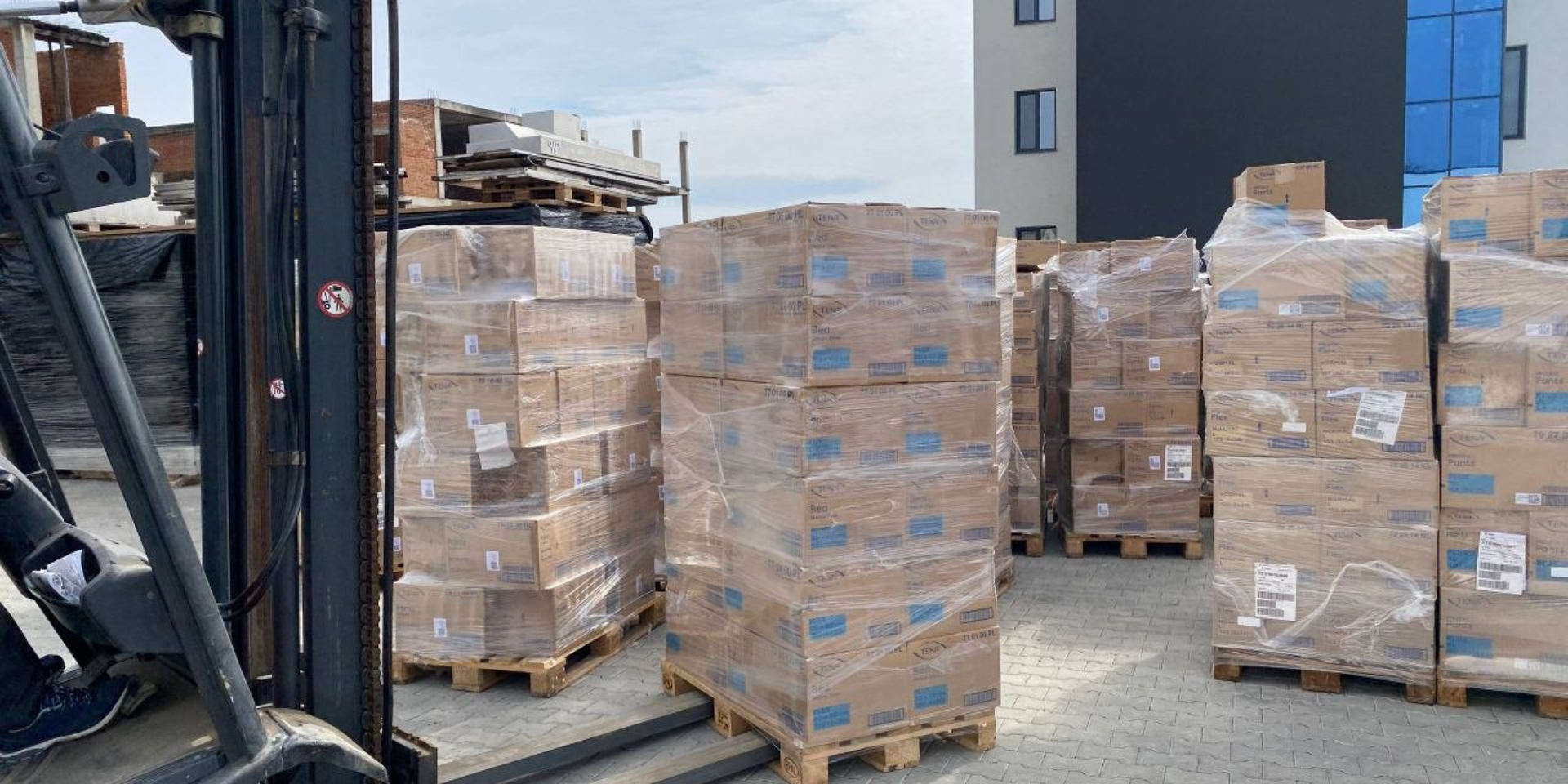
Another truck loaded with humanitarian aid left Sweden for Ukraine, carrying medical equipment and essential supplies that will soon reach hospitals and healthcare providers working under the constant pressures of war.
For many hospitals across Ukraine, especially in front-line cities and regions closest to active combat, stable access to medical supplies is never guaranteed. Equipment wears out, stock runs low, and the needs of medical teams shift from week to week. Humanitarian aid deliveries help hospitals and clinics keep treating patients, responding to emergencies, and functioning through long periods of uncertainty.
This work is not a one-time effort. Delivering direct humanitarian assistance to frontline regions and communities affected by the war remains a central part of Help Ukraine Gothenburg's mission. As long as the war continues, so does the need for consistent, reliable support.
Each shipment depends on organizations and people who choose to support this work repeatedly - turning individual contributions into a systematic, dependable channel of aid. We're grateful for every partner who makes that possible, and for the trust placed in HUG to carry this support to where it's needed most.
Thank you to Salhgrenska University Hospital, Bräcke Diakoni Skövde, Lönns Trucks, Volvo Group, Volvo Defence, our incredible volunteers and everyone who helped make this delivery possible.
Would you or your organisation like to support our next humanitarian shipment?
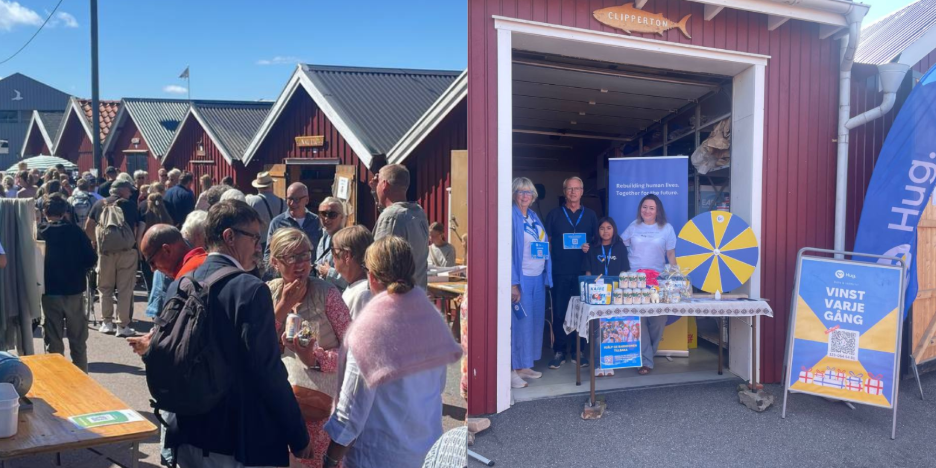
In early August, the HUG team took part in Donsö Boat Show, out on the island of Donsö in Gothenburg’s southern archipelago.
The island was full of life, with boats, exhibitions, market stalls, and plenty of people coming together to enjoy a beautiful summer day by the sea.
Together with our amazing volunteers, we welcomed visitors to our stand, where they could buy Ukrainian treats, enjoy a cup of coffee, and try our beloved Always-Win Lottery. Most importantly, the day allowed us to raise funds for summer camps for Ukrainian children affected by the war.
Thanks to the incredible generosity of everyone who stopped by, we raised 12,580 SEK to support this initiative.
But events like Donsö Boat Show are more than fundraising. They give us a chance to meet people in the local community, tell them more about HUG and the work we do, and create new opportunities for people to get involved and support Ukraine. Our volunteers play a huge part in this. By giving their time and energy and representing HUG at events like this, they help us build connections and bring our work closer to the community.
A heartfelt thank you to everyone who stopped by, supported our fundraiser, or simply took the time to talk to us — and to our wonderful volunteers who brought so much warmth, energy and good spirit to the day.
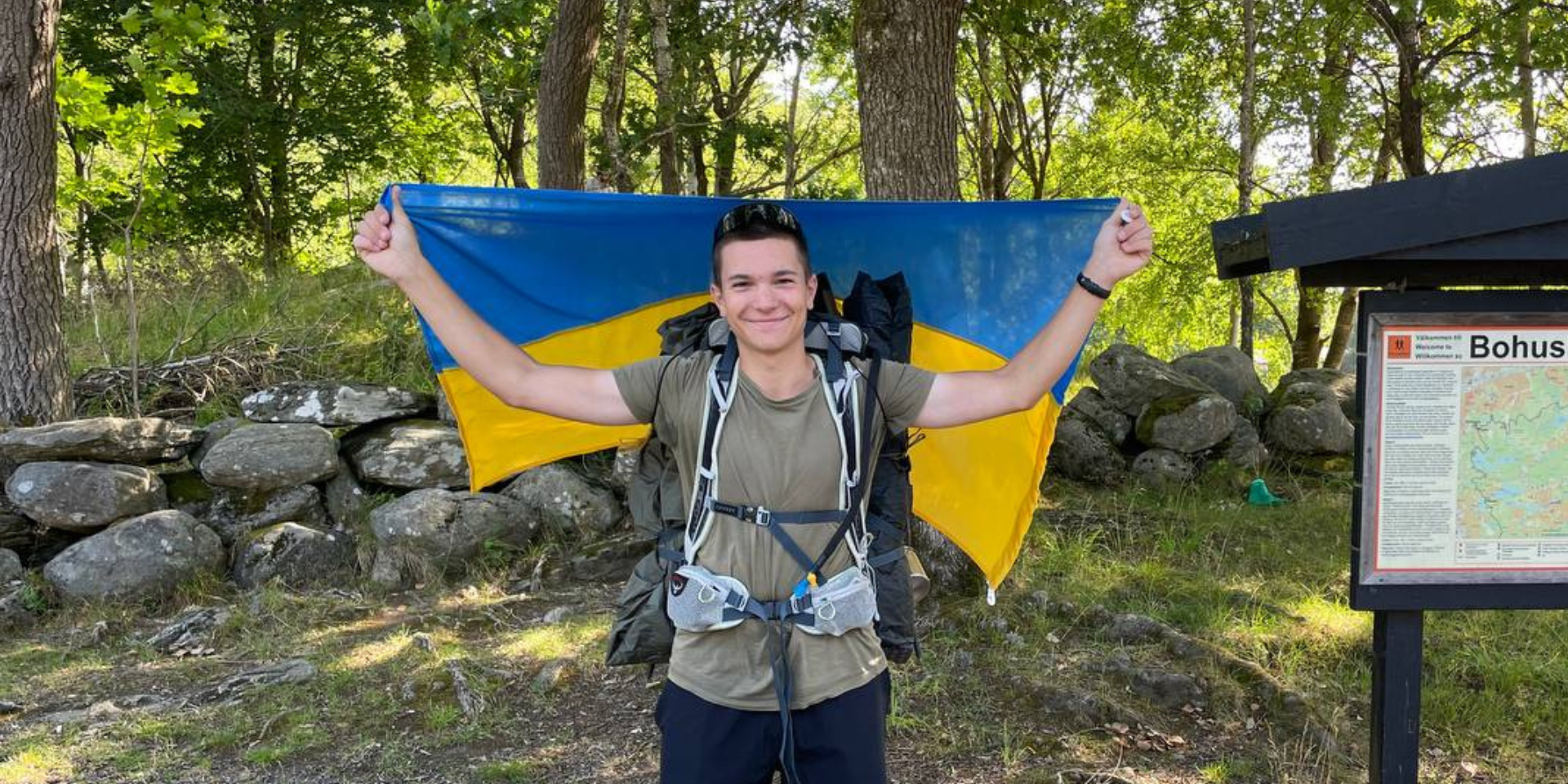
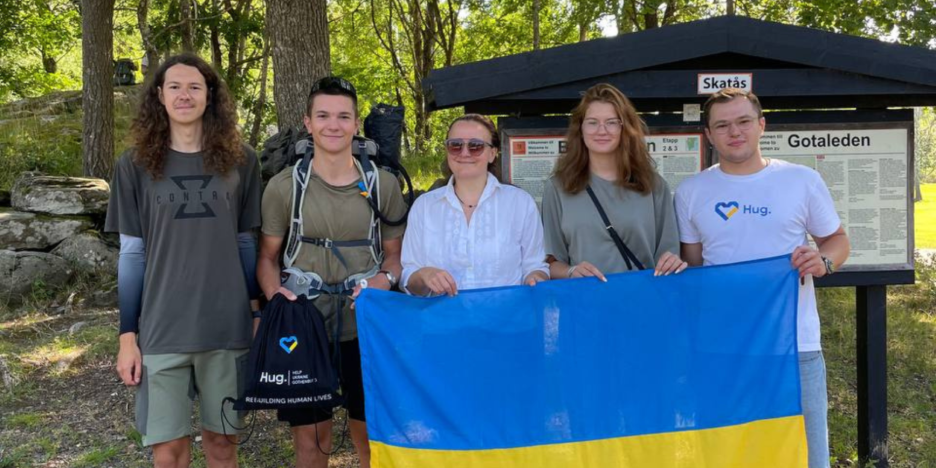
Our volunteer Artem recently took on a challenge of his own: 15 days and more than 300 km on foot along the Bohusleden trail, from Gothenburg to Strömstad.
He chose to take on the journey to raise awareness and support for HUG’s fundraiser for five armoured CASEVAC vehicles for Ukraine - life-saving vehicles used to evacuate wounded soldiers and civilians from the frontline.
For us at HUG, this is what community is all about. We are always inspired to see people who believe in what we do find their own ways to contribute and turn their ideas, time and energy into something meaningful.
Sometimes that means volunteering at an event or helping spread the word. Sometimes it means coming up with a completely new idea and taking it all the way - just as Artem did. Every one of these contributions helps us move our initiatives forward and reach more people.
Artem’s journey brought attention to an important HUG fundraiser, but it also showed how much can happen when people decide to take action themselves. And that is something we are incredibly grateful for.
Thank you, Artem, for taking on this challenge, believing in the cause, and showing what community can look like in action.
And a heartfelt thank you to everyone who followed his journey, encouraged him along the way, or supported the fundraiser.
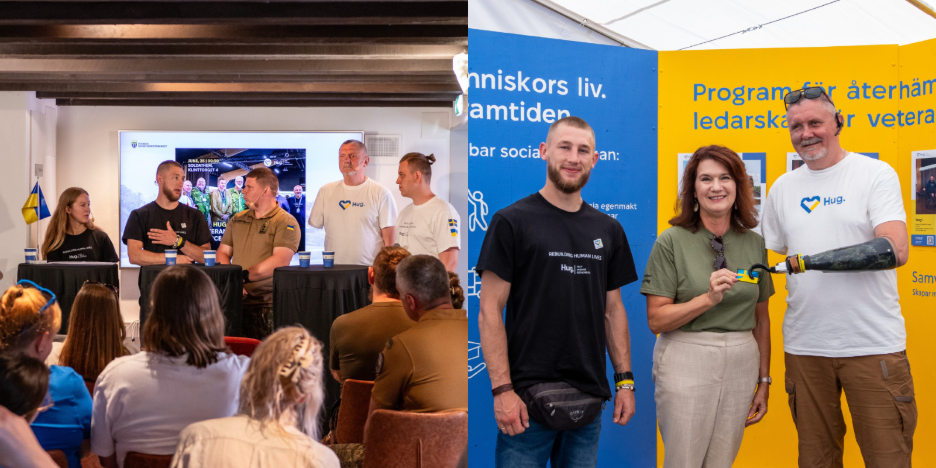
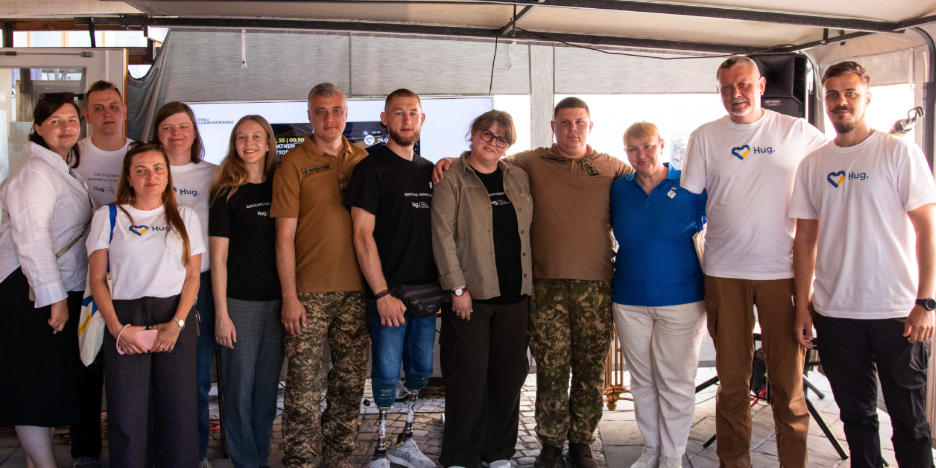
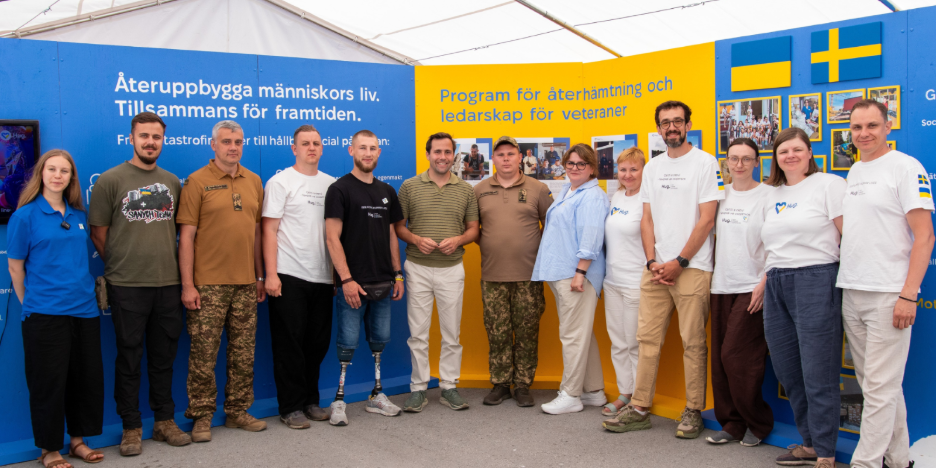
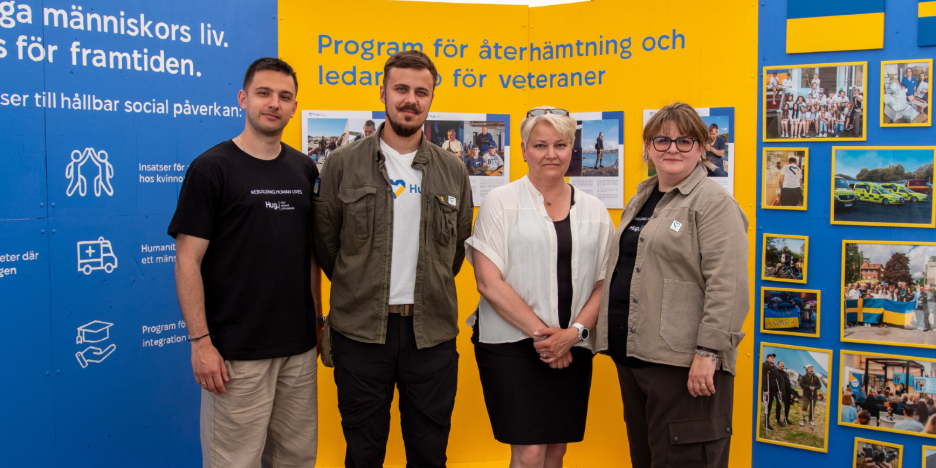
For the second year in a row, HUG (Help Ukraine Gothenburg) took part in Almedalen Week. This year, we came with an important mission: to bring greater attention to the experiences and needs of Ukrainian veterans while sharing what we have learned through our work with veterans and their families.
To strengthen these conversations, we invited our friends and partners from Ukraine to join the HUG delegation in Visby. The delegation brought together Ukrainian veterans and participants of HUG for Heroes, combat medics, military professionals, and civil society leaders with first-hand experience of war, veteran recovery, and life after service.
Among them were:
Oleksandr Tereshchenko - People’s Hero of Ukraine, former Deputy Minister of Veterans Affairs of Ukraine, and civil society leader.
Viktor - veteran of the 95th Air Assault Brigade.
Ivan - Lieutenant Colonel, National Guard of Ukraine.
Oleksii - drone unit commander, National Guard of Ukraine.
Oleksandr Borys - combat medic, tactical medicine instructor, and evacuation systems specialist.
Throughout the week, members of the delegation took part in panel discussions, lectures, meetings, and conversations with Swedish decision-makers, defence professionals, researchers, veterans, and civil society organisations.
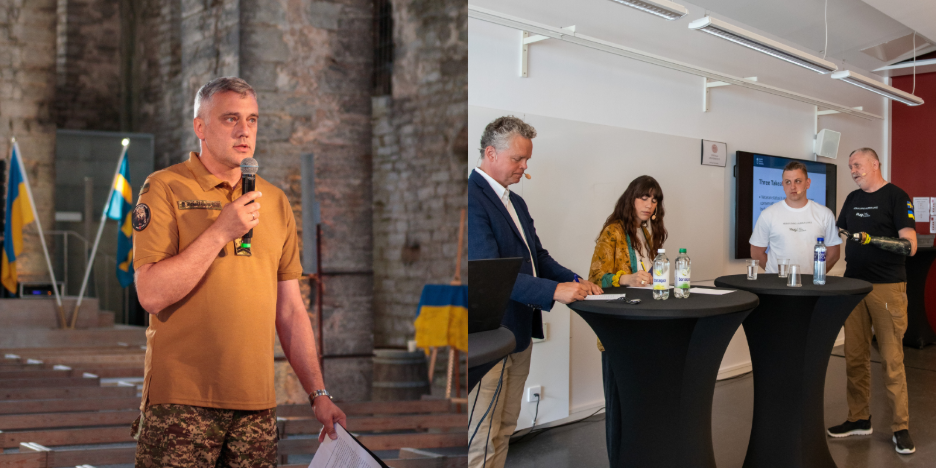
Oleksandr Tereshchenko joined the panel “Ukrainian veterans and democratic resilience: lessons for reintegration”, organised by the Swedish Defence University and the Folke Bernadotte Academy. Drawing on his experience as a servicemember, policymaker, and civil society leader, he brought a first-hand perspective to discussions on veteran reintegration, democracy, social inclusion, and trust.
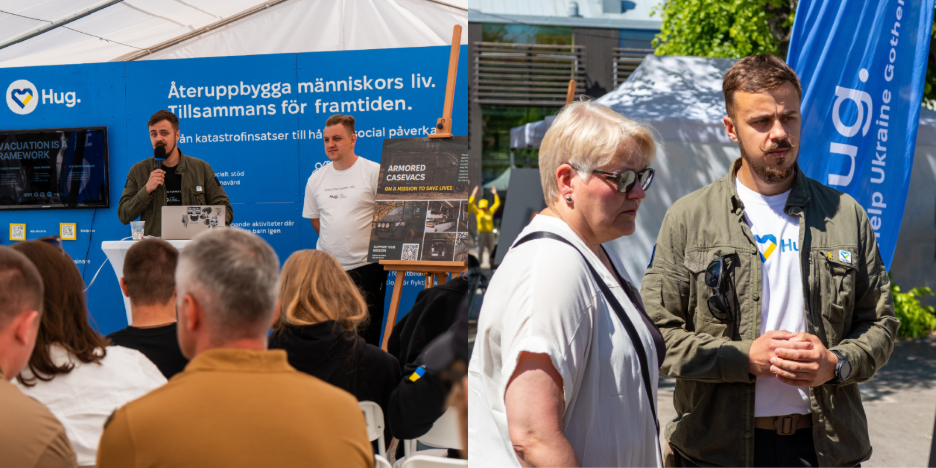
Our delegation also brought practical experience into discussions on preparedness and resilience. Combat medic Oleksandr Borys shared the latest realities of medical evacuation in Ukraine and presented HUG’s work to transform civilian vehicles into evacuation vehicles. Together, HUG and Oleksandr are now developing reinforced armoured casevacs to respond to the growing threat from drones and improve protection during evacuation.
Beyond the panels, our Ukrainian guests met with Swedish leaders and senior representatives from the defence and security community, including Pål Jonson, Benjamin Dousa, Ann Linde, Michael Claesson, Jonny Lindfors, Mattias Ardin, Mikael Frisell, Micael Johansson, and others. The conversations covered modern warfare, UAV technologies, total defence, veteran reintegration, and the lessons Ukraine’s experience can offer Sweden and Europe.
For us at HUG, Almedalen is about more than bringing people together for a week. It is about creating opportunities for people with very different experiences to meet, listen to one another, and learn from each other.
We are grateful to everyone who welcomed our Ukrainian delegation, shared their time and knowledge, and helped make these conversations possible. We look forward to continuing the dialogue and to make steps forward for future partnerships and collaborations. 💙💛
More businesses are choosing to turn their values into action, and we are proud to see this movement grow.
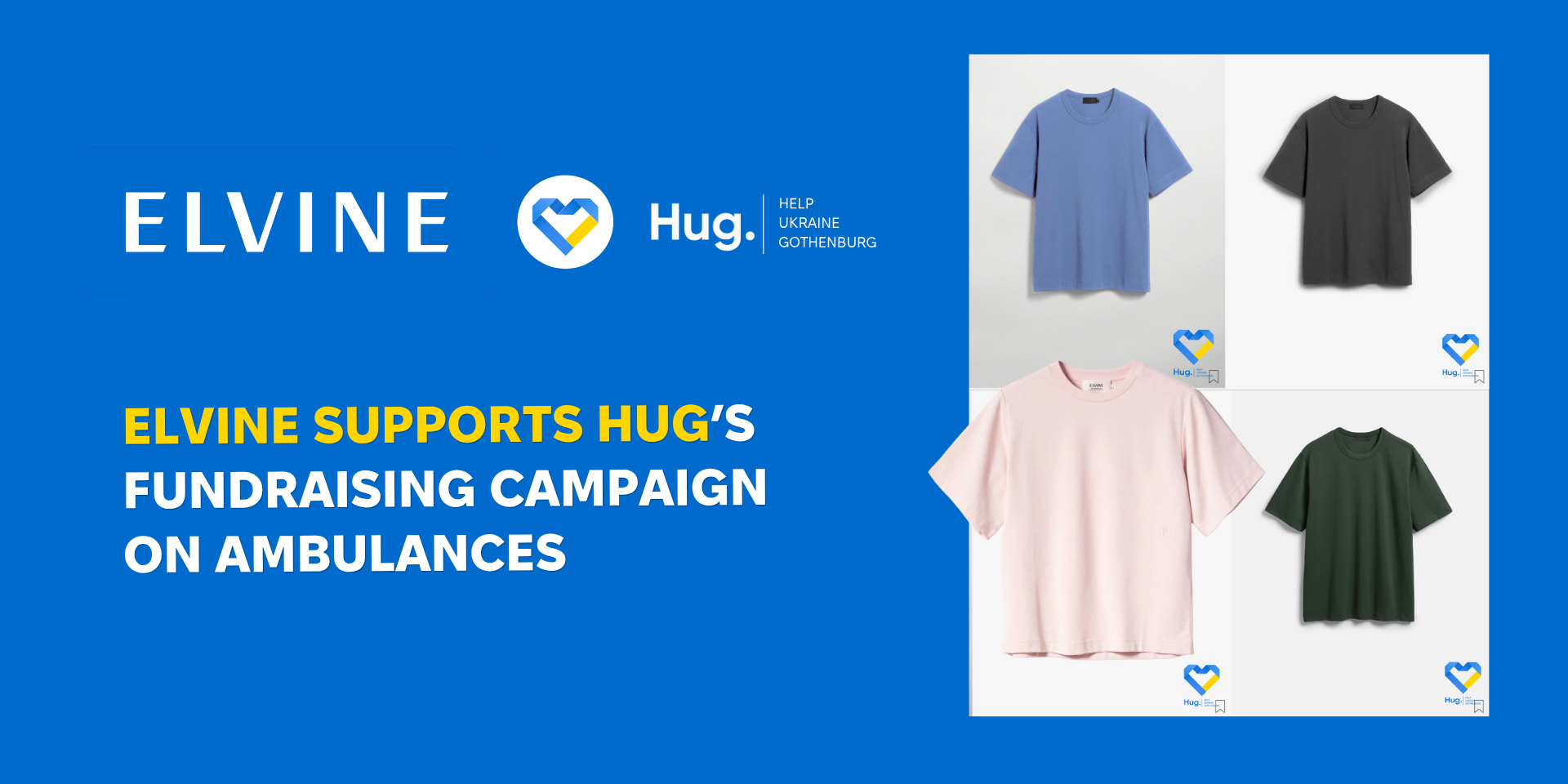
We are happy to welcome Elvine as a new partner of The Ambulance Initiative - a fundraising campaign launched by Help Ukraine Gothenburg and Omnistaff to support the purchase of ambulances and rescue vehicles for Ukraine.
As part of this collaboration, Elvine has dedicated a selection of products to the initiative. For every item marked with the HUG logo purchased through their website, 10% of the sale goes directly to The Ambulance Initiative. Every contribution is used exclusively to help us to purchase life-saving vehicles for Ukraine.
Thank you, Elvine, for your trust, commitment, and for standing with Ukraine. Together, we make a real difference.
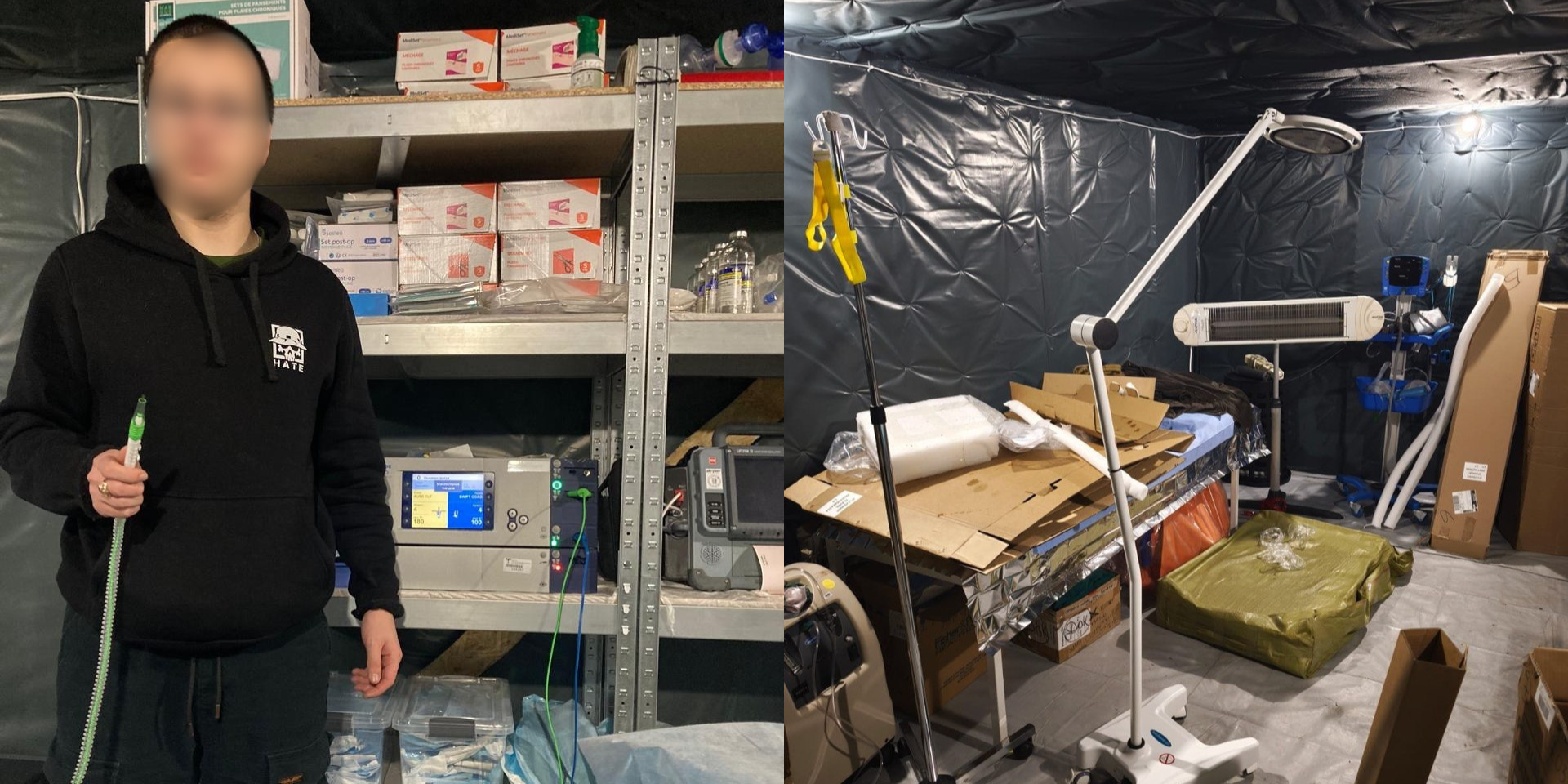
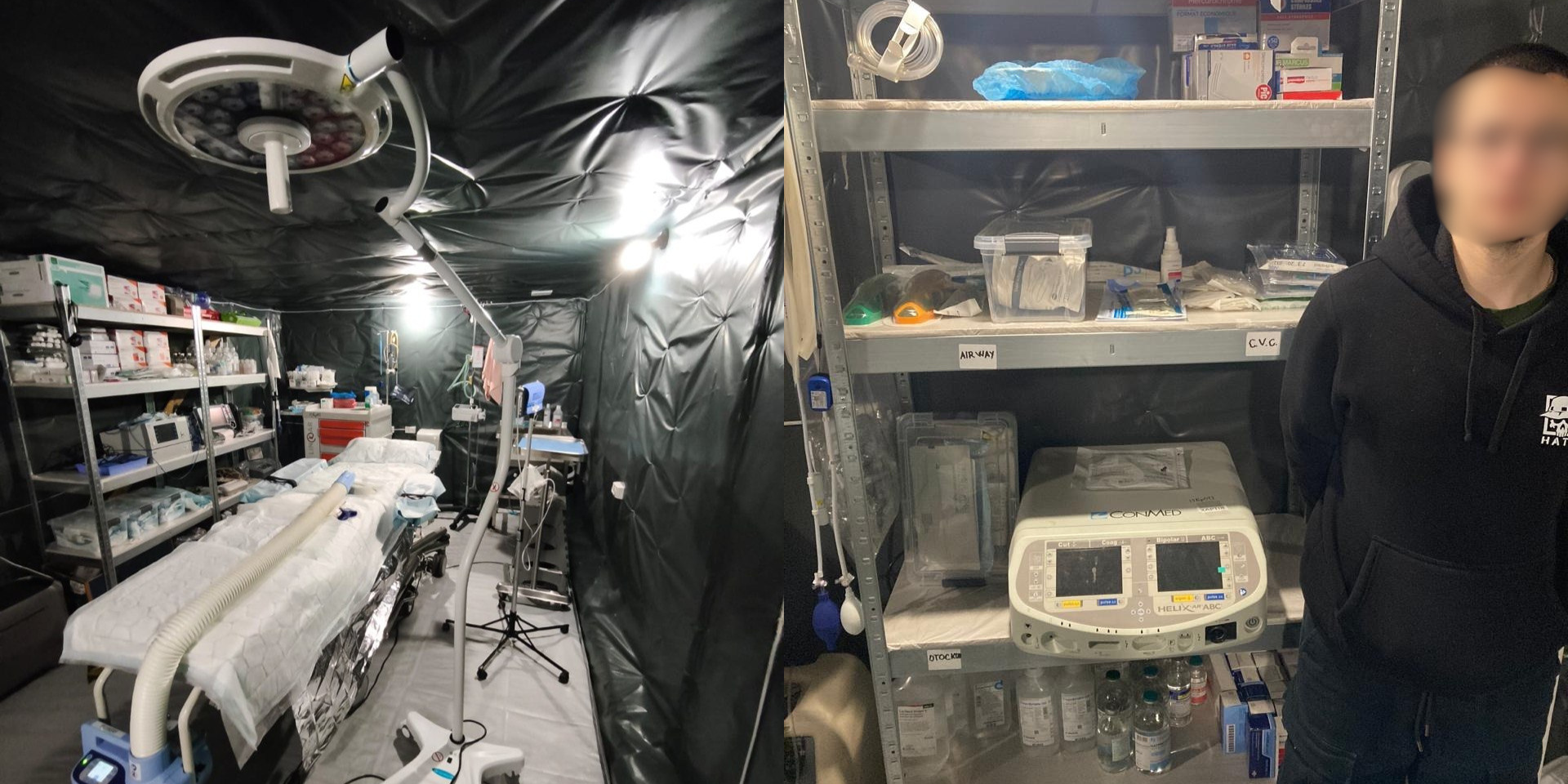
Help Ukraine Gothenburg has helped equip another stabilization point in Ukraine - strengthening an important link in the chain of emergency medical care for people injured during the war. 🇺🇦
In a war where medical facilities, ambulances and healthcare workers are themselves exposed to attack, saving a wounded person’s life can depend on what happens in the first minutes and hours after an injury. WHO has documented more than 3,000 attacks on healthcare in Ukraine since the beginning of the full-scale invasion, putting additional pressure on an already stretched health system.
One important part of this system is the stabilization point - a medical facility located closer to where people are injured, where medical teams can provide urgent treatment and stabilize patients before they are transferred to a hospital or another level of care.
This can be critical for patients with severe injuries. Many need urgent interventions before they can be safely transported, allowing medical teams to begin treatment before the patient reaches a larger hospital.
Stabilization points also help distribute pressure across the wider healthcare system. By providing initial treatment closer to the frontline, they allow hospitals to focus their capacity on patients who require surgery, intensive care or other specialized treatment.
For us at HUG, humanitarian support is therefore not only about delivering supplies. It is also about strengthening the infrastructure and capacity that allow Ukrainian medical teams to respond to war-related injuries and continue providing care under extraordinary conditions.
By helping equip another stabilization point, we are strengthening one more link in the chain that helps get wounded people the right care at the right time.
How can support systems for veterans be built in a way that reflects their real experiences and needs?
This was one of the key questions at the panel "Ukrainian veterans and democratic resilience: lessons for reintegration", organised by the Försvarshögskolan - Swedish Defence University and the FBA (Folke Bernadotte Academy), presenting new research on Ukrainian veterans' attitudes toward democracy, equality, social inclusion and trust.
The findings challenge the idea that veterans can be seen as one single group. Instead, factors such as war injuries, demobilization and gender play a bigger role in shaping attitudes - showing that veterans have different experiences and needs that must be reflected in support systems.
The panel brought together: 🔹 Erik Melander, Swedish Defence University 🔹 Emma Mihlzen, Folke Bernadotte Academy 🔹 Oleksandr Tereshchenko, representative of HUG’s Ukrainian delegation, People’s Hero of Ukraine and former Deputy Minister of Veterans Affairs of Ukraine 🔹 Patrik Oksanen, moderator, Swedish Defence University
With his background as a servicemember, policymaker and civil society leader, Oleksandr connected research and policy discussions with the realities of veteran transition.
At HUG, we believe that effective solutions start with understanding the people they are designed for. We are glad to contribute to the discussion by connecting Ukrainian experience with Swedish institutions and helping ensure that veterans’ voices are part of shaping the policies that affect them.
Veteran reintegration is not simply about returning to civilian life. It is about recognising the experience, skills, and potential veterans bring with them, and creating the conditions for them to find a new sense of purpose and belonging.
For the past two years, HUG has been working with Ukrainian veterans and their families through the Hug for Heroes programme. More than 350 participants have taken part in our initiatives, giving us practical experience and a deeper understanding of the challenges and opportunities within veteran recovery and reintegration.
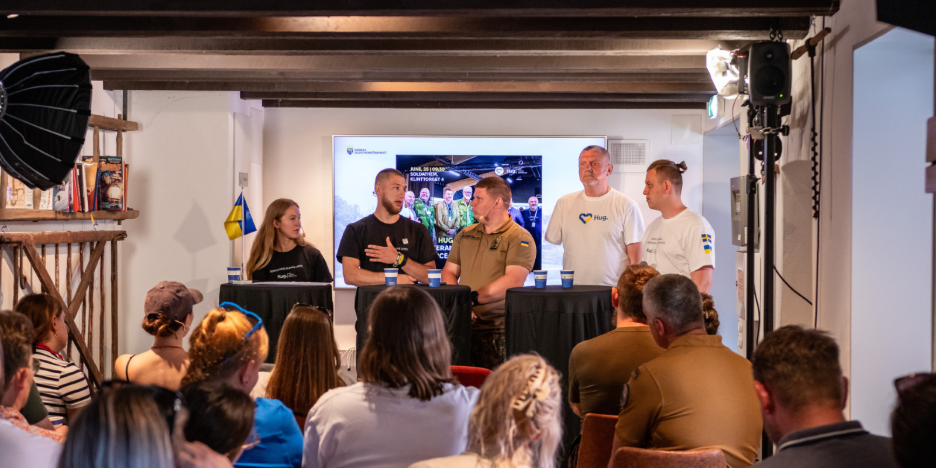
At Almedalen, HUG hosted a panel discussion at Svenska Soldathemsförbundet where we presented the Hug for Heroes programme model and shared lessons learned from our work. Most importantly, we gave the stage to those who have experienced the programme firsthand.
Hug for Heroes participants shared their perspectives on rebuilding civilian life, finding new purpose, and applying the leadership, resilience, and decision-making skills developed through military service to new challenges.
Their stories showed that reintegration is also about recognising the value, skills, and contribution veterans bring to society.
We are genuinely glad to see veteran reintegration receiving increasing attention from organisations and institutions internationally. Supporting veterans is our shared responsibility and an important part of building stronger, more resilient communities.
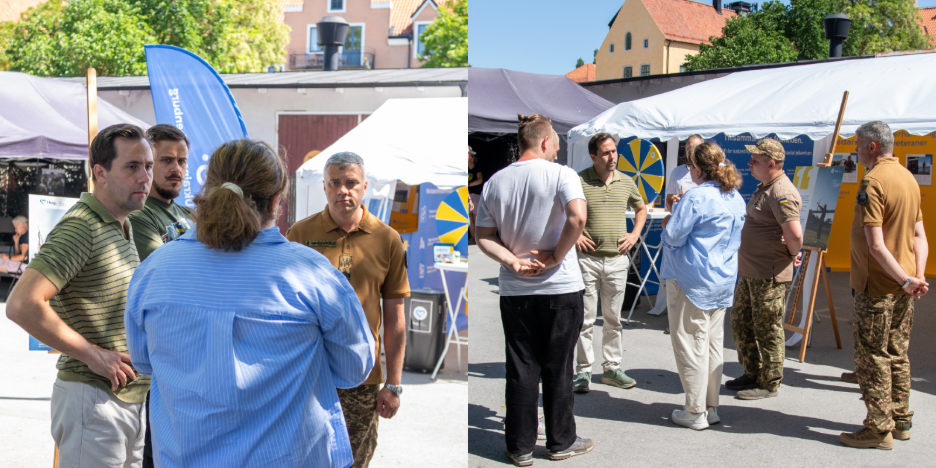
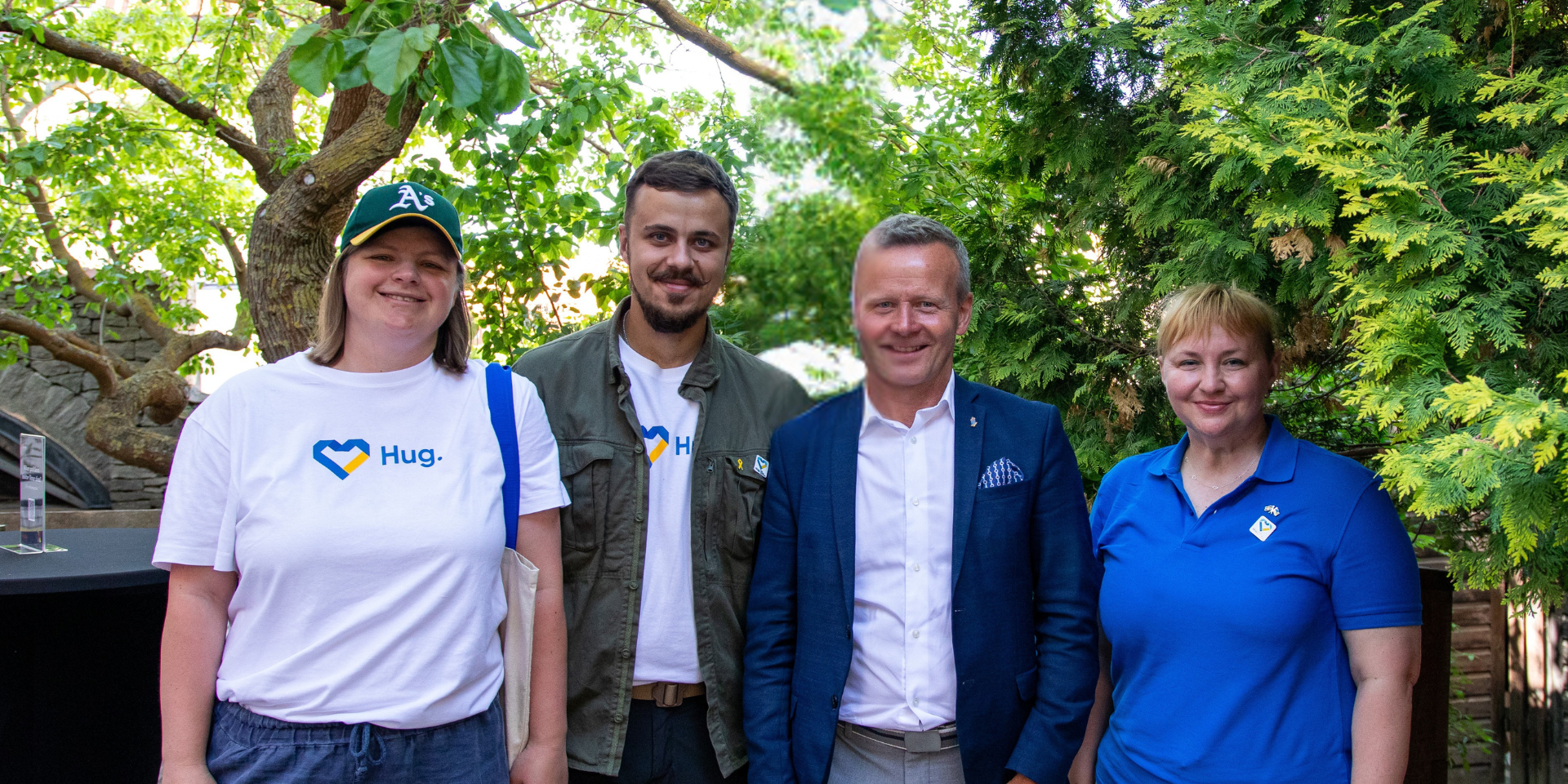
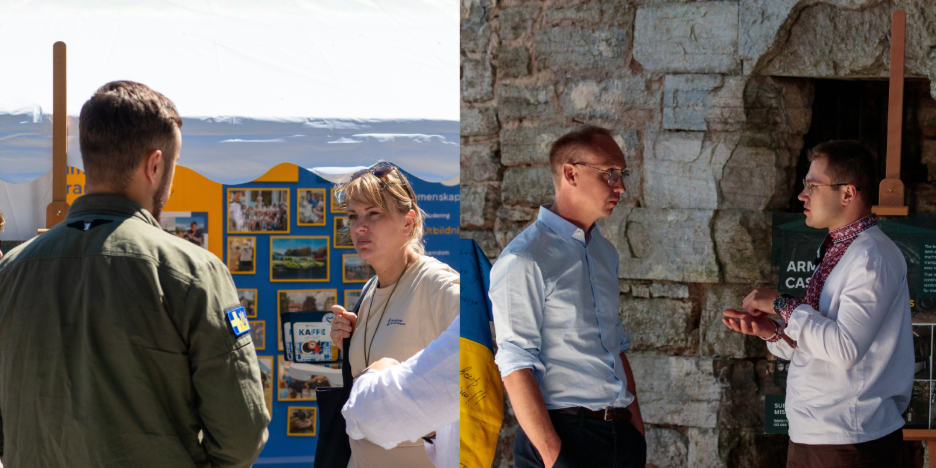
June was an eventful month for HUG, and one of its highlights was meeting Benjamin Dousa, Minister for International Development Cooperation and Foreign Trade, at our stand in Visby.
Last year, Benjamin Dousa, together with the Svenska institutet, presented HUG with the Government's Award for Voluntary Efforts in Support of Ukraine. This year, our team had the opportunity to share how this recognition has been transformed into real impact through our continued work.
We presented HUG’s different areas of activity and shared more about HUG for Heroes - our recovery and reintegration programme for Ukrainian veterans and their families.
We introduced the programme model, highlighted the importance of a family-centred approach to veteran recovery, and gave participants the opportunity to share their own experiences from the programme.
Thank you, Benjamin Dousa, for your visit, openness and attention to our work. We look forward to future opportunities for collaboration and creating long-term impact together. 💙 💛
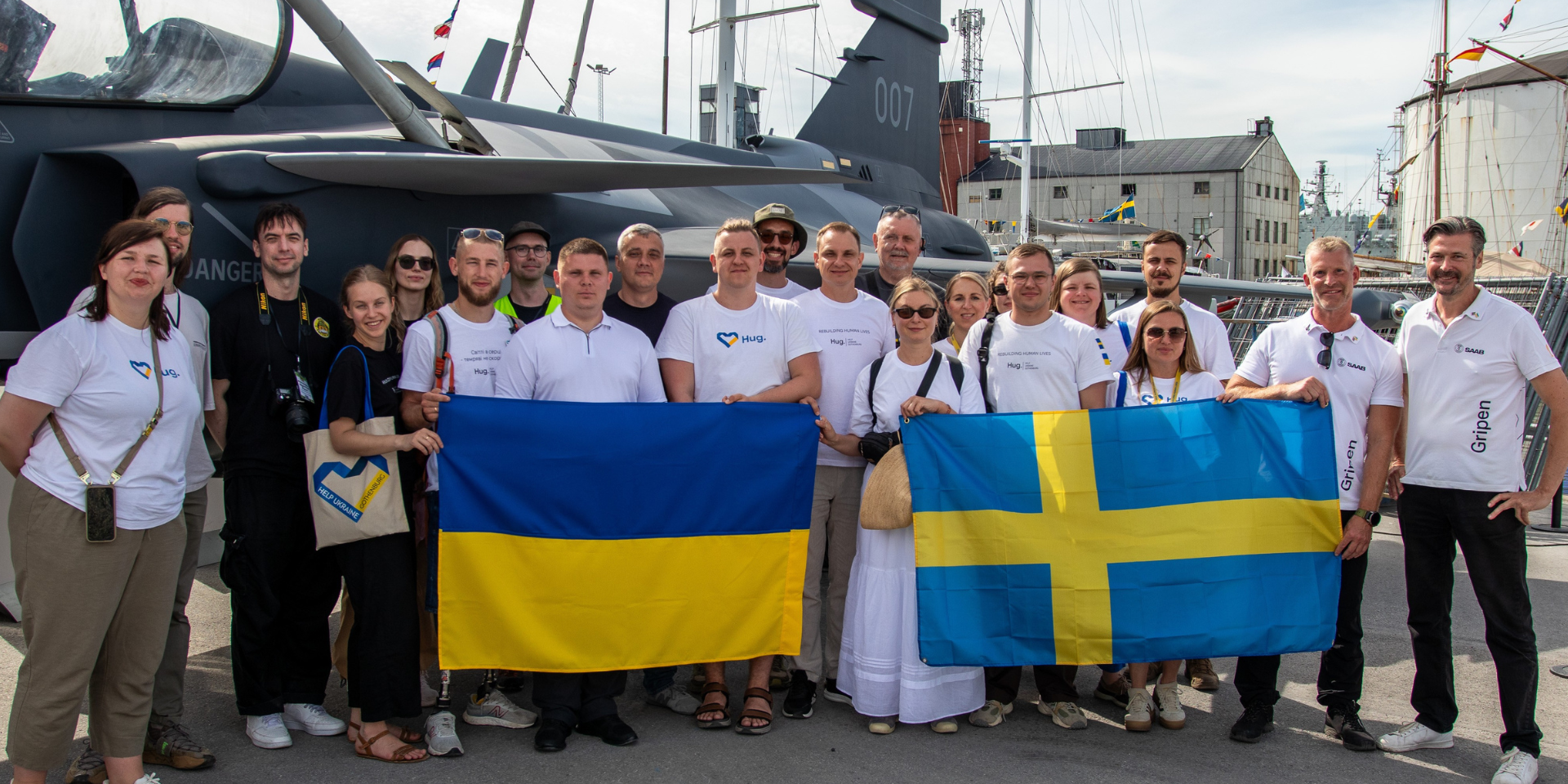
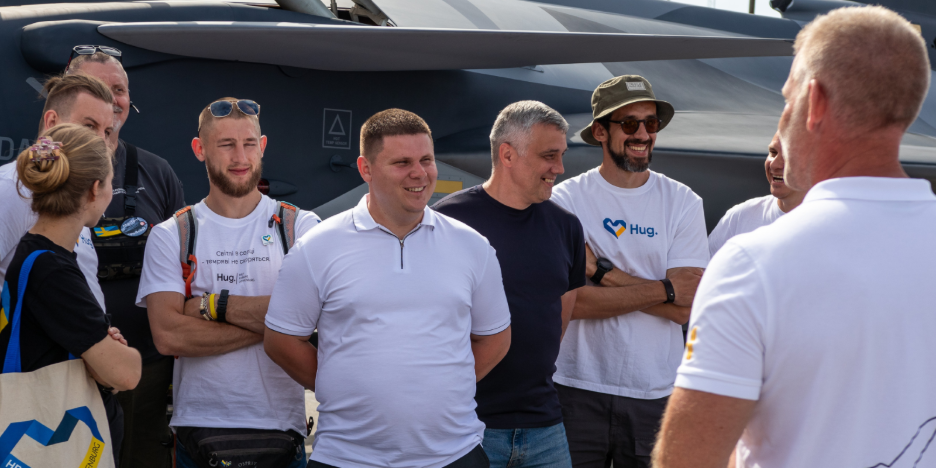
One of the most memorable moments HUG experienced during the #Almedalen Week was getting closer to Swedish defence innovation - the full-scale replica of the JAS 39 Gripen E fighter aircraft presented by Saab in Visby.
The HUG team, together with our Ukrainian guests, could not miss the unique opportunity to step inside the aircraft, explore it firsthand, and learn more about its capabilities during an insightful guided tour. Seeing the Gripen up close and hearing about the technology behind it was a truly impressive experience for our delegation.
Later during the week, we were honoured to welcome Johansson Micael, CEO of Saab, at our joint event with the Embassy of Ukraine in Sweden. Micael shared a few words with our guests and joined a meaningful conversation with Ukrainian veterans and military experts from our delegation.
Thank you, Johansson Micael and Saab team for incredible experience and interesting conversations. We look forward to continuing this dialogue and welcoming you to a future HUG for Heroes programme.
The future of Ukraine depends on understanding the realities created by the war today.
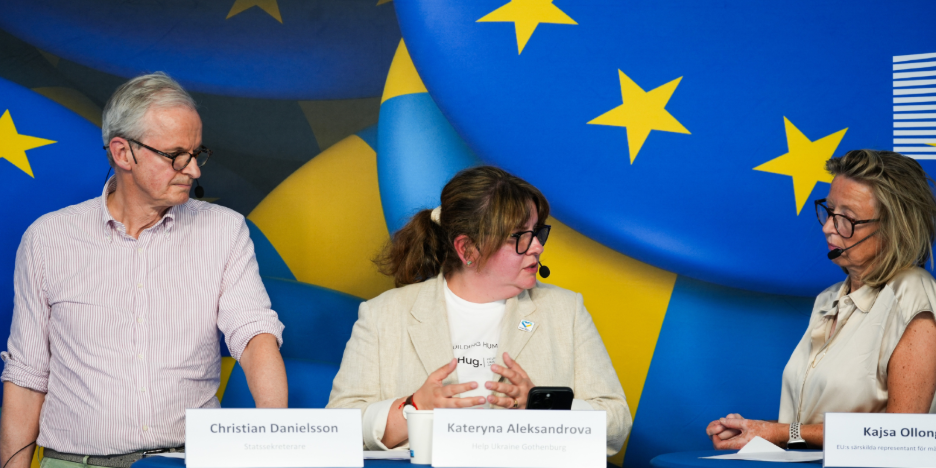
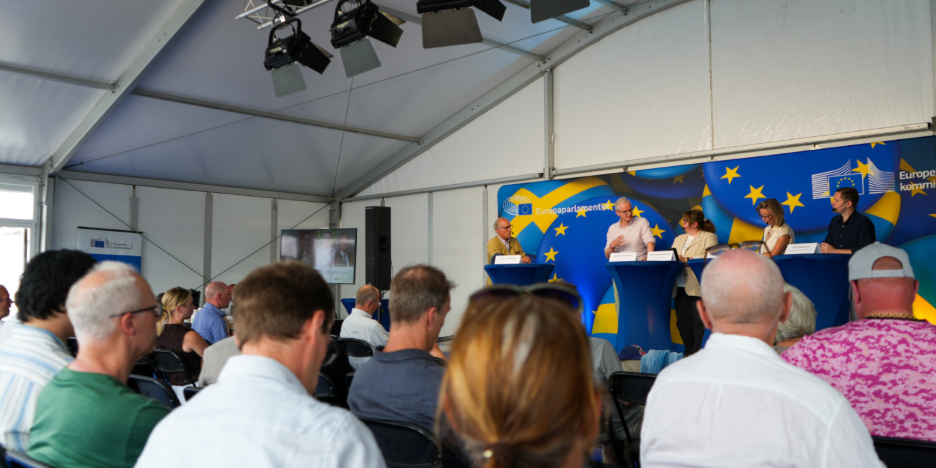
HUG co-founder Kateryna Aleksandrova joined the European Commission’s panel “The Road to Peace in Ukraine - At What Cost?” together with Kajsa Ollongren, Calle Håkansson, PhD, Christian Danielsson and Erik. von Pistohlkors to share insights from HUG's work on the ground, addressing Ukraine's current needs and long-term recovery, with particular attention to the role of veterans in strengthening society.
Since the first day of Russia’s full-scale invasion, HUG has worked directly with communities in Ukraine, responding to humanitarian and frontline needs and building practical expertise in recovery and reintegration. This experience helps us develop solutions based on the real needs of people affected by war.
One of the key topics Kateryna highlighted during the panel was veteran reintegration - a challenge that will shape not only Ukraine’s recovery, but also the strength of its future society.
Through our work with veterans and their families, we see the importance of creating opportunities for veterans to continue contributing to society after service. Veterans represent a unique source of knowledge, skills and experience that can strengthen communities and contribute to strengthening our society.
Thank you to Kajsa Ollongren, Calle Håkansson, Christian Danielsson and Erik von Pistohlkors and everyone who joined us at Almedalen during this discussion. We appreciate the opportunity to bring the perspective of civil society into important dialogues about the future of Ukraine and Europe.
Medical evacuation in Ukraine has been transformed by the realities of modern warfare. Drone threats, constant surveillance and precision strikes require new approaches - including evacuation vehicles that can adapt quickly to the conditions on the ground.
During Almedalen Week, our friend, combat medic and volunteer Oleksandr Borys shared Ukraine’s experience in medical evacuation and discussed the importance of rapid adaptation and preparedness with representatives of Swedish Civil Defence and Resilience Agency.
For several years, HUG together with Oleksandr has been transforming used minibuses into life-saving evacuation vehicles. Ordinary civilian vehicles receive a new life and a critical mission: to help evacuate wounded soldiers, civilians, and provide first aid.
This work is an example of how society can respond to new challenges by adapting existing resources and finding practical solutions to urgent needs.
Thank you to Mikael Frisell and Cecilia Hull for meeting. We are grateful for the opportunity to share our experiences, learn from others and contribute to the important conversations around preparedness and resilience. 💙 💛
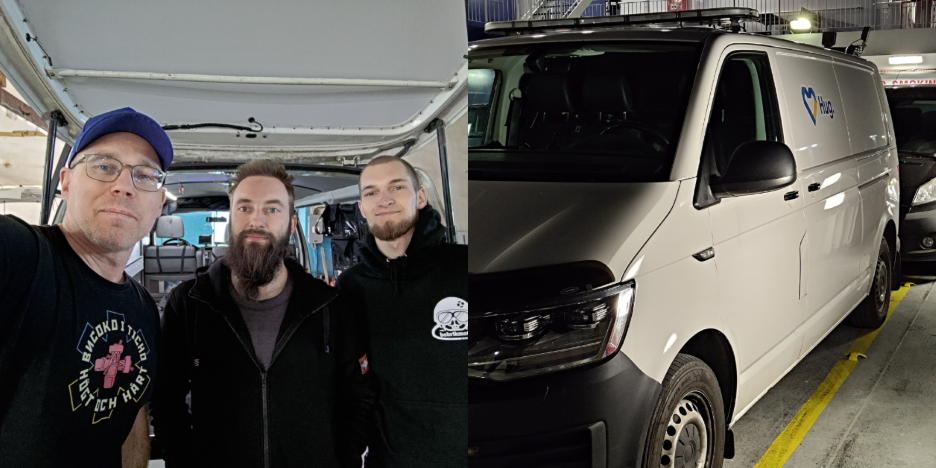
Joakim, a volunteer with Help Ukraine Gothenburg (HUG), recently completed his first trip to Ukraine on behalf of the organization, personally driving a van loaded with essential medical supplies to our partners on the ground.
Among the supplies were tourniquets and other critical medical items, which will be further distributed to combat medics and soldiers at the front lines. At the same time, the van itself will remain in Ukraine and will be rebuilt into an armored CASEVAC vehicle designed for frontline medical evacuation.
This transformation is part of a wider effort to adapt to the realities of modern warfare. In Ukraine, vehicles like this are not just transported from point A to point B — they are rebuilt locally to match the conditions on the ground, where speed, protection, and reliability can directly determine whether wounded people make it back alive.
A CASEVAC, short for casualty evacuation vehicle, is built to reach places where regular transport cannot go and to bring wounded soldiers out of dangerous positions alive. It is not a combat vehicle and it carries no weapons. Its only mission is to give medics the time and protection they need to save lives on the move.
But today, evacuation has become significantly more dangerous than it used to be. Modern battlefields are constantly monitored and actively targeted, including by FPV drones. Medical evacuation vehicles are often specifically attacked, because stopping a rescue means preventing wounded soldiers from reaching care.
For years, HUG has been delivering rescue vehicles to Ukraine alongside our partners on the ground. This year, we expanded that work — armoring the vehicles themselves so each evacuation has a better chance of finishing safely under fire. Protection has to keep up with what the battlefield demands.
The van delivered by Joakim will go through exactly this kind of transformation together with our partners in Ukraine, becoming an armored CASEVAC designed for frontline use. Joakim shared his experience from this journey with us:
The need for life-saving vehicles is growing every day. Support our fundraising campaign and help us build and deliver more armored CASEVACs for Ukraine.
For many veterans living with life-changing injuries, the greatest challenge is not learning how to use a prosthesis. It is believing that life after injury can still be defined by possibility rather than limitation.
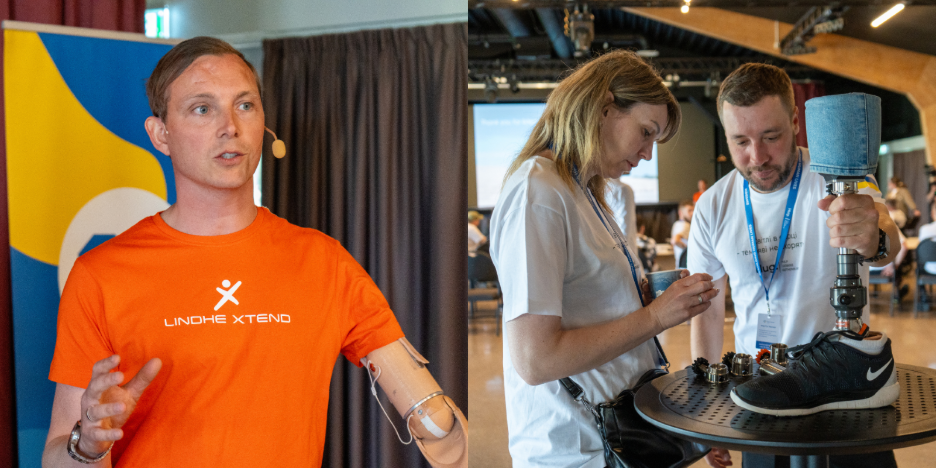
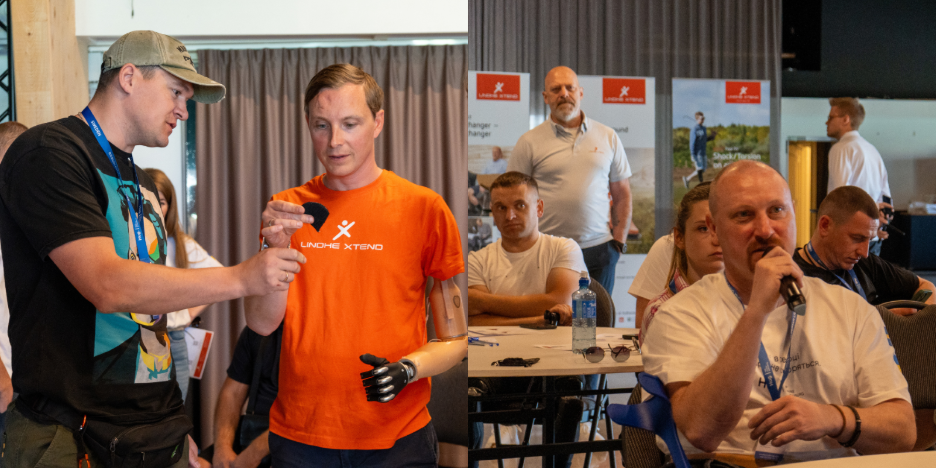
That is why HUG for Heroes brings participants together with people who have transformed their own recovery into a source of strength for others. One of those people was Christoffer Lindhe – Paralympic champion, entrepreneur, and founder of Lindhe Xtend Group, a company developing advanced prosthetics and assistive technology.
Christoffer shared his personal journey – from a life-changing injury to recovery, and from recovery to building a company that helps others regain their independence.
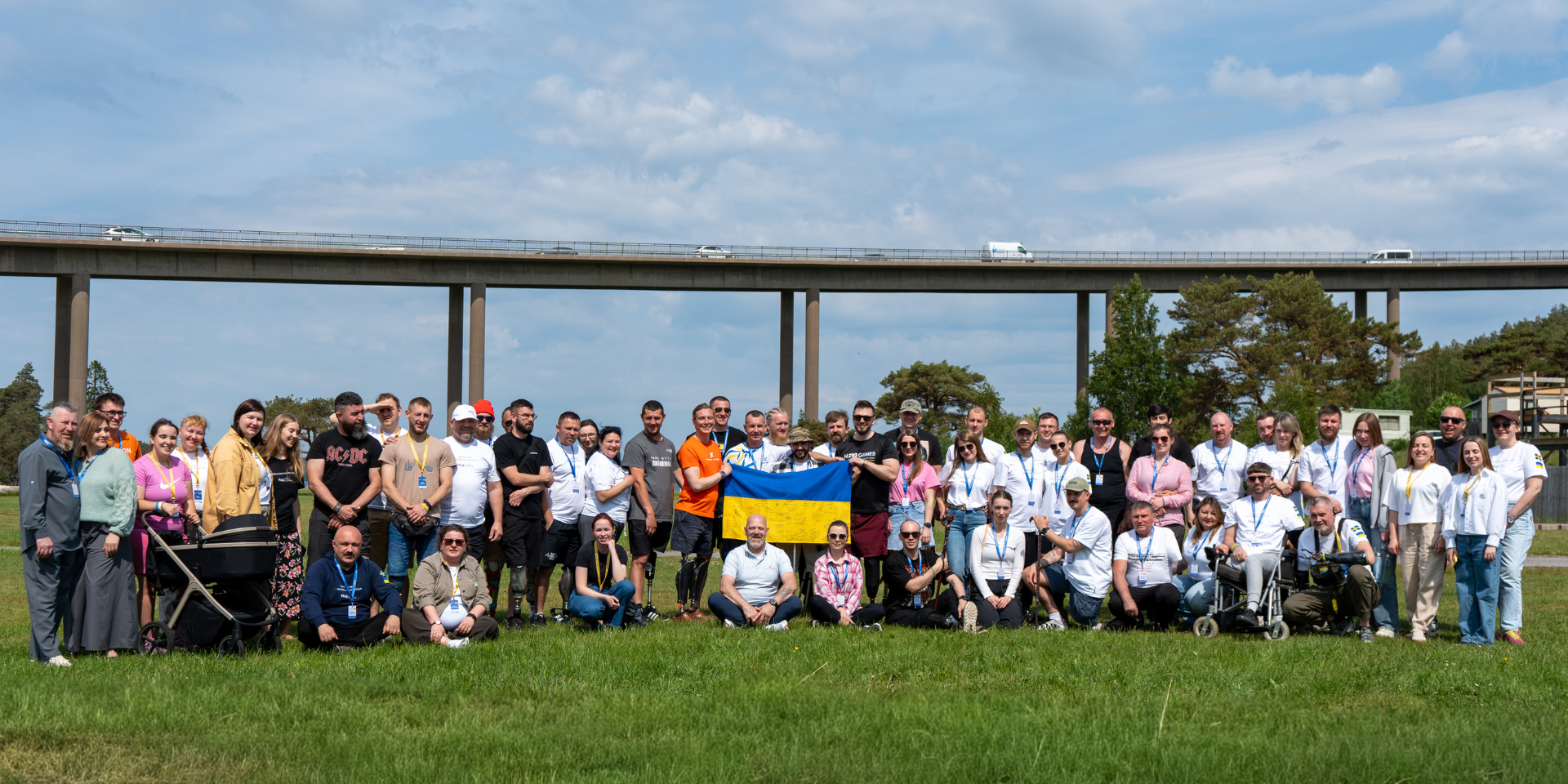
By speaking openly about not only his recovery but also the setbacks, decisions, and determination along the way, Christoffer offered participants a powerful example of what rebuilding life after injury can look like. Participants also had the opportunity to speak with him, try Lindhe Xtend Group prosthetics firsthand, and explore different models. At the end of the visit, they signed a Ukrainian flag and presented it to him as a token of appreciation.
At HUG, we believe that recovery is strengthened not only through medical care, but also through connection, shared experience, and the opportunity to see what is possible. Sometimes, the most powerful form of support is meeting someone who helps you imagine a future you could not yet see.
Our sincere thanks to Christoffer Lindhe for joining HUG for Heroes and sharing his story so openly, and to Lindhe Xtend Group for giving participants the opportunity to experience their prosthetic solutions firsthand.


.png)


.png)
.png)
.png)
.png)

.png)
.png)


.png)
.png)