Published:
December 29, 2025
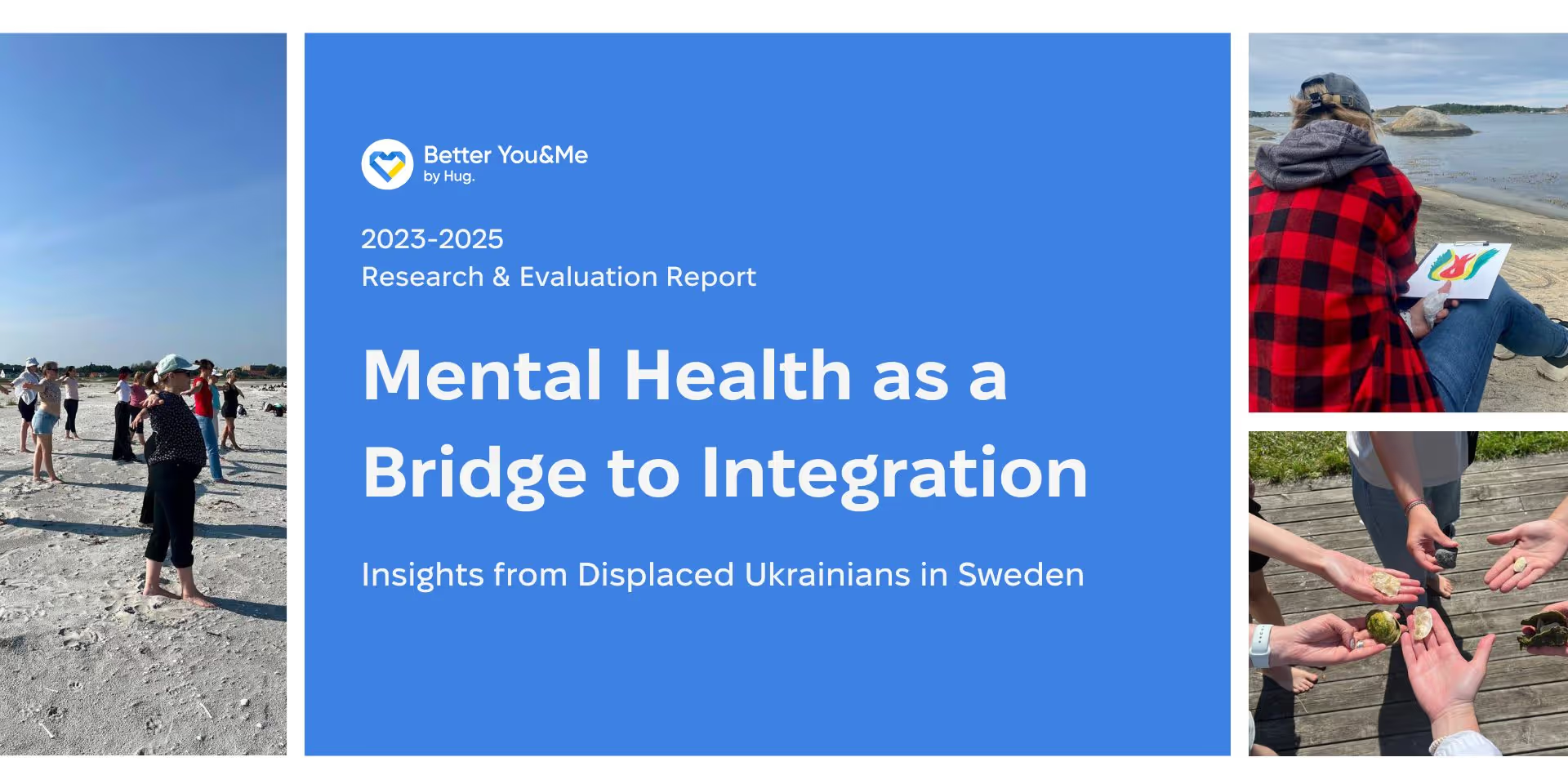
The full-scale Russian invasion of Ukraine has forced millions of people to flee their homes and rebuild their lives elsewhere. In Sweden, tens of thousands of Ukrainians have been living under Temporary Protection since 2022. While they have found safety, the psychological burden of war, loss, and forced displacement still affects their daily lives and well-being.
This reality became increasingly visible through the daily work of Help Ukraine Gothenburg (HUG). An initiative that started as emergency humanitarian assistance gradually evolved into long-term community support and, eventually, into a mental health support programme – Better You&Me.
Over two years, participants described a range of traumatic war- and displacement-related experiences, including the loss of home and community, family separation, suppressed grief, constant fear for their children, and the ongoing pressure to integrate while still living with the emotional burden of war.
“I have nowhere to go back to. My homtown is destroyed”
“I lost everything. I feel equally ‘not at home’ in Ukraine and here in Sweden” .
“I think a lot of those who came to Sweden and have been living here for more than a year can say they don’t remember the past year. What was the spring like? What was the summer like in 2022 - was there even a summer? We saw the sun, but we didn’t feel it. No one was happy about it”.
Emerging Mental Health Risks
Over time, these experiences have contributed to emerging and deepening mental health risks. Prolonged exposure to war-related stress and uncertainty for many participants contributed to rising levels of anxiety, depressive symptoms, exhaustion, and social withdrawal. Of particular concern was the growing presence of suicidal thoughts and burnout-related symptoms, alongside difficulties in daily functioning.
Despite significant mental health challenges, mental health needs frequently remain unmet, as 72% of participants indicated a need for additional mental health support.
Recovery is not a linear process. It may depend on multiple conditions, but being simply seen, heard, and connected is often where it begins.
For people affected by war and displacement, recovery requires time and space – something the programme was able to offer, but also much more. Better You&Me is an initiative that brings together a research-informed approach with community-based practice. Its design is grounded in trauma-informed, culturally sensitive, and recovery-oriented principles.
Over two years, Better You&Me supported 671 displaced Ukrainians in Sweden through 1,578 individual sessions and 432 group sessions focused on mental well-being.
These figures, however, represent more than performance indicators. Each hour of assistance reflects a personal experience, shaped by loss, fear, and grief, but also by hope and efforts to reconnect with oneself, others, all, and life.
The report presents recommendations for strengthening mental health, well-being and integration support for displaced Ukrainians in Sweden.
Based on the research and evaluation findings, we recommend that the Government of Sweden and SKR reinforce community-based mental health initiatives, including piloting partnerships with trusted NGOs providing culturally and language-appropriate support. The findings also underscore the need for closer collaboration between public authorities, healthcare, education, municipal services, and civil society.
In addition, authorities should ensure clear and transparent information on future residence options. According to the Better You&Me findings, uncertainty around residence status has become a major stressor, placing employment, education, and family stability at risk.
Read more – hug.ngo/bym-report-2023-2025


.png)
