Want to make a difference? Join our monthly newsletter and stay updated on our latest projects, success stories, and opportunities to support our work.
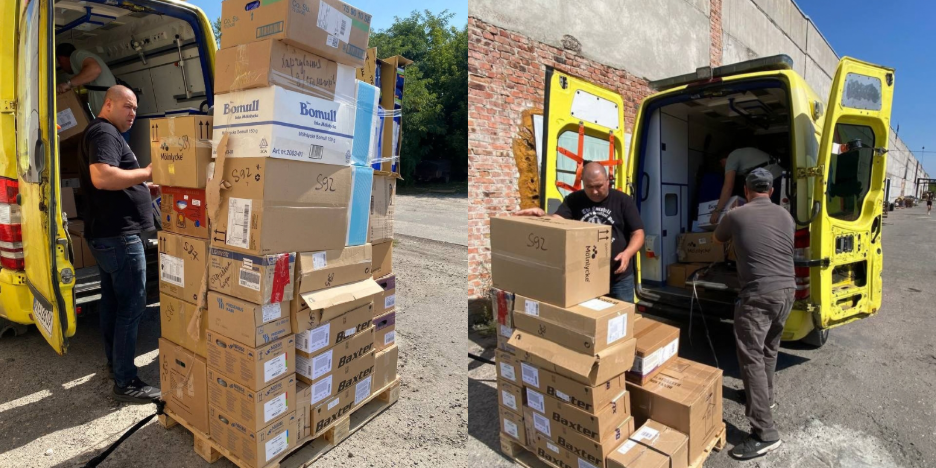
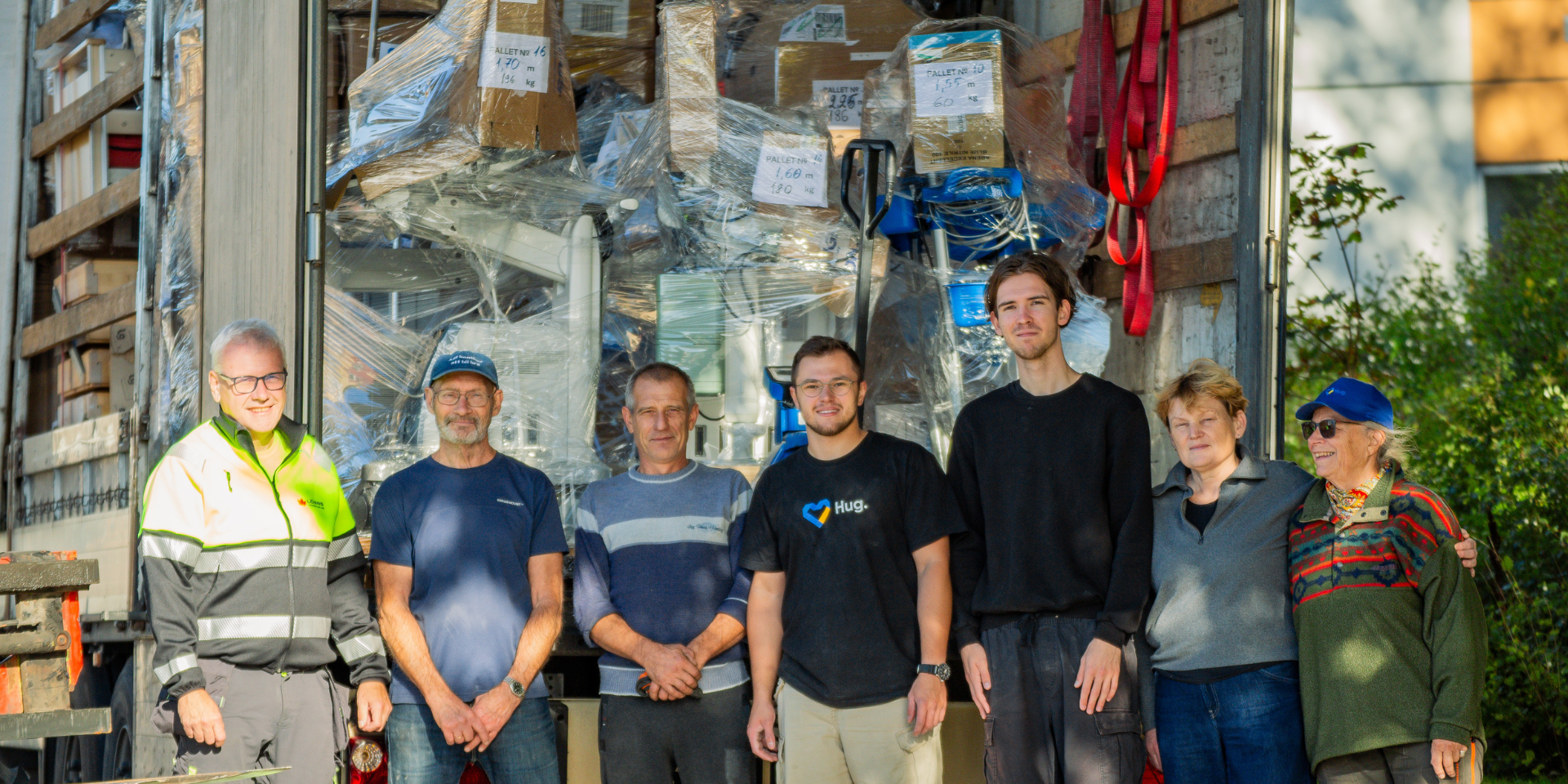
Medical equipment and supplies donated by Sahlgrenska University Hospital have arrived in Ukraine as part of another humanitarian delivery organised by HUG. The shipment includes anaesthesia machines, other medical equipment, and essential medical supplies that will support healthcare professionals in their daily work and help them care for patients.
Behind this delivery is a long-standing partnership. Sahlgrenska University Hospital has supported HUG’s humanitarian work for years and remains a valued and reliable partner to this day. We are truly grateful for their continued trust and support, and for the opportunity to work together to help healthcare facilities in Ukraine.
We also thank our partners in Ukraine for keeping us updated that donation reached healthcare facilities.
The need for medical equipment and supplies remains significant. Through cooperation between healthcare institutions, organisations and volunteers in Sweden and Ukraine, equipment that is no longer needed in one setting can continue serving patients in another.
Would you or your organisation like to support HUG’s humanitarian work in Ukraine?
Get in touch at contact@hug.ngo to learn how we can work together.
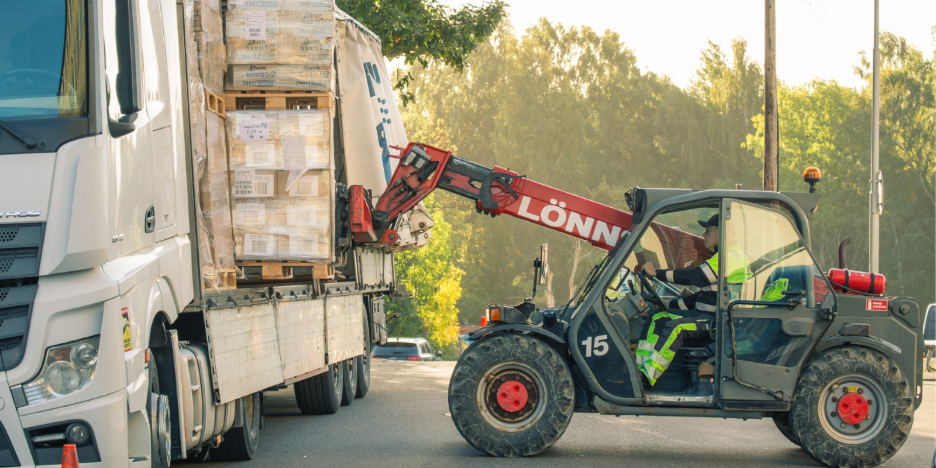
In October, the HUG team sent another truck of humanitarian aid from Sweden to Ukraine, carrying medical equipment and healthcare supplies to support healthcare professionals and communities affected by the war.
Once the shipment arrives, our partners in Ukraine will distribute the donated equipment and supplies to communities where they are needed.
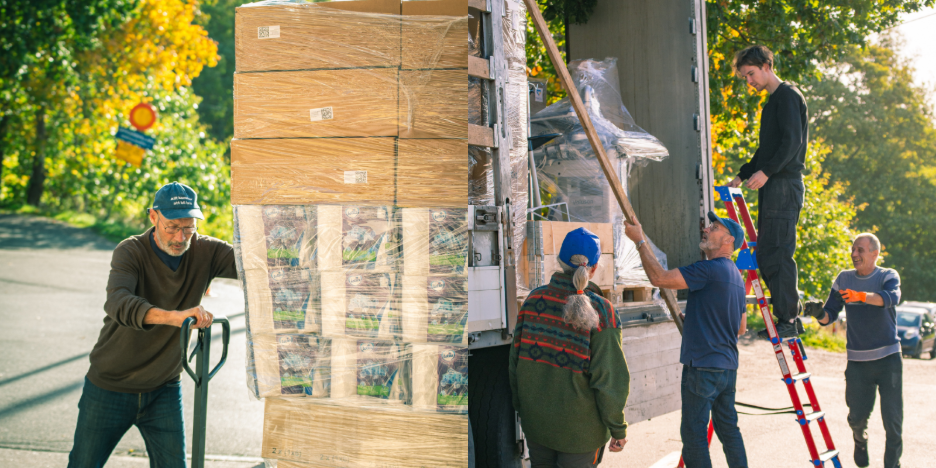
This delivery was made possible thanks to the continued support of Sahlgrenska University Hospital, Essity and LÖNNS TRUCKAR AB. We are also grateful to every volunteer who helped sort, pack and prepare the equipment for transport.
Every shipment is a collective effort, bringing together organisations and people in Sweden and Ukraine to get essential resources where they are needed. Thank you to everyone who contributed to making this delivery possible.
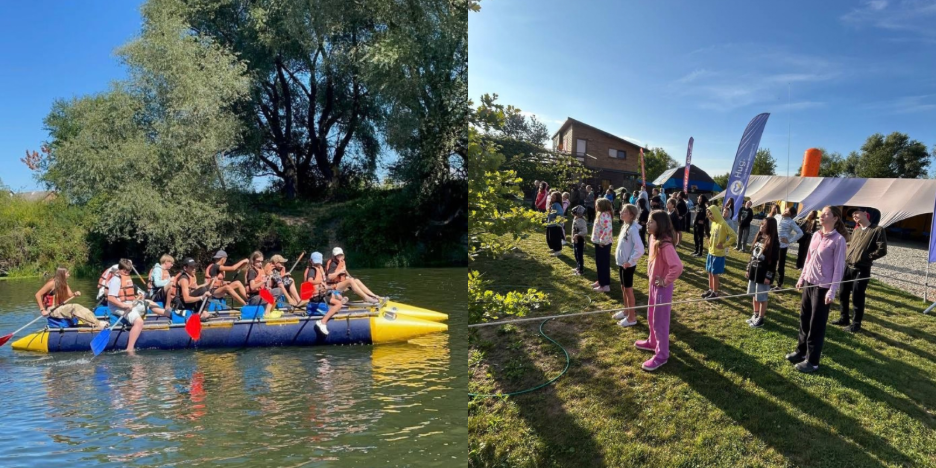
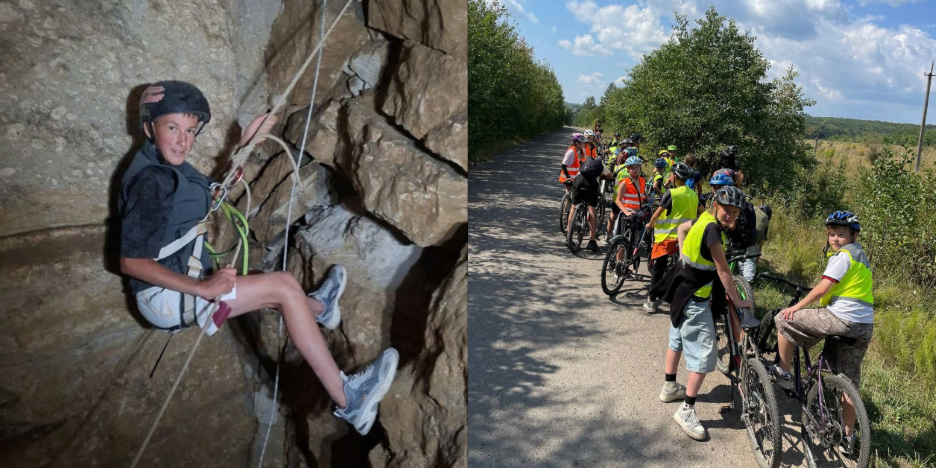
This summer, 100 children spent time exploring the mountains of western Ukraine at summer camps organized by HUG together with our partners. The camps welcomed children who have lost one or both parents, or whose parent is missing or held in captivity because of the war.
The days were filled with mountain hikes, cycling, cave exploration, and rafting. Children who had only just met found themselves navigating trails, paddling together and helping each other through unfamiliar challenges.
Away from their everyday routines and screens, there was time for conversations, new friendships, and shared discoveries. A raft takes teamwork to steer, and a cave route calls for someone to lead the way and someone to make sure no one is left behind. Through these experiences, the children learned to cooperate, take responsibility, and discover what they could achieve together.
Children affected by war need support, but they also need what every child needs: space to play, learn, make friends and grow at their own pace. A summer camp cannot change the circumstances waiting for them at home, but it can give them something valuable to carry forward - new skills, greater confidence and memories of a summer spent with friends.
All 100 children took part free of charge, thanks to our partners, donors and volunteers who helped make the camps possible.
Help Us Welcome More Children Next Summer
We continue to hear from families who would like their children to take part. That is why HUG will keep fundraising throughout the year, so we can welcome more children next summer.
Every contribution brings us closer to making that possible.
A heartfelt thank you to everyone who helped create these experiences. With your support, we can open the door to more adventures, friendships and opportunities for children in Ukraine to learn, grow and simply enjoy being children.
When Russia launched its full-scale invasion, Ukrainian volunteers, local initiatives and aid organisations had to learn quickly how to keep communities functioning under extreme pressure. Years later, that knowledge is no longer only Ukraine's concern. As Sweden strengthens its own preparedness and resilience, it is a resource worth listening to.
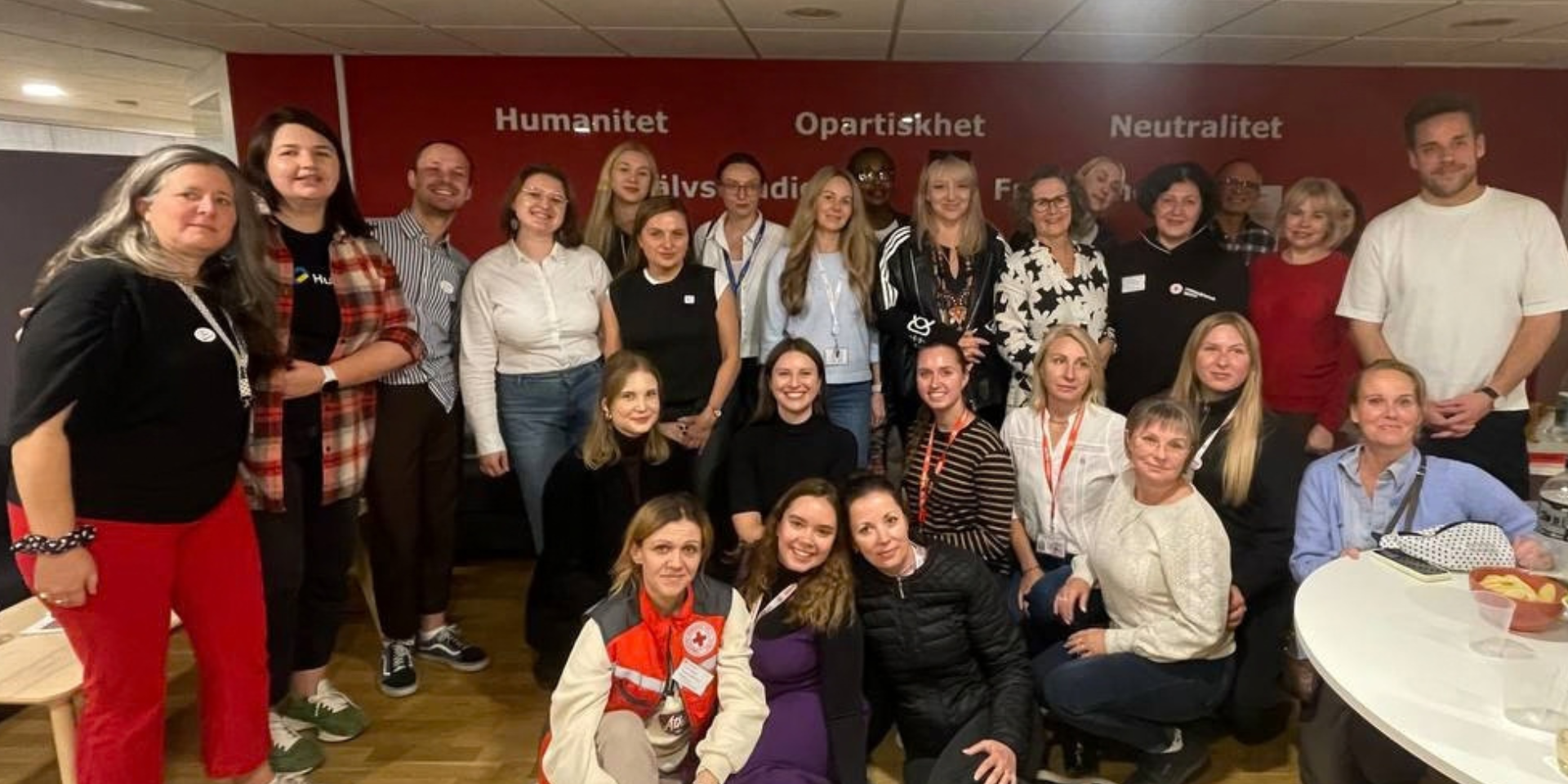
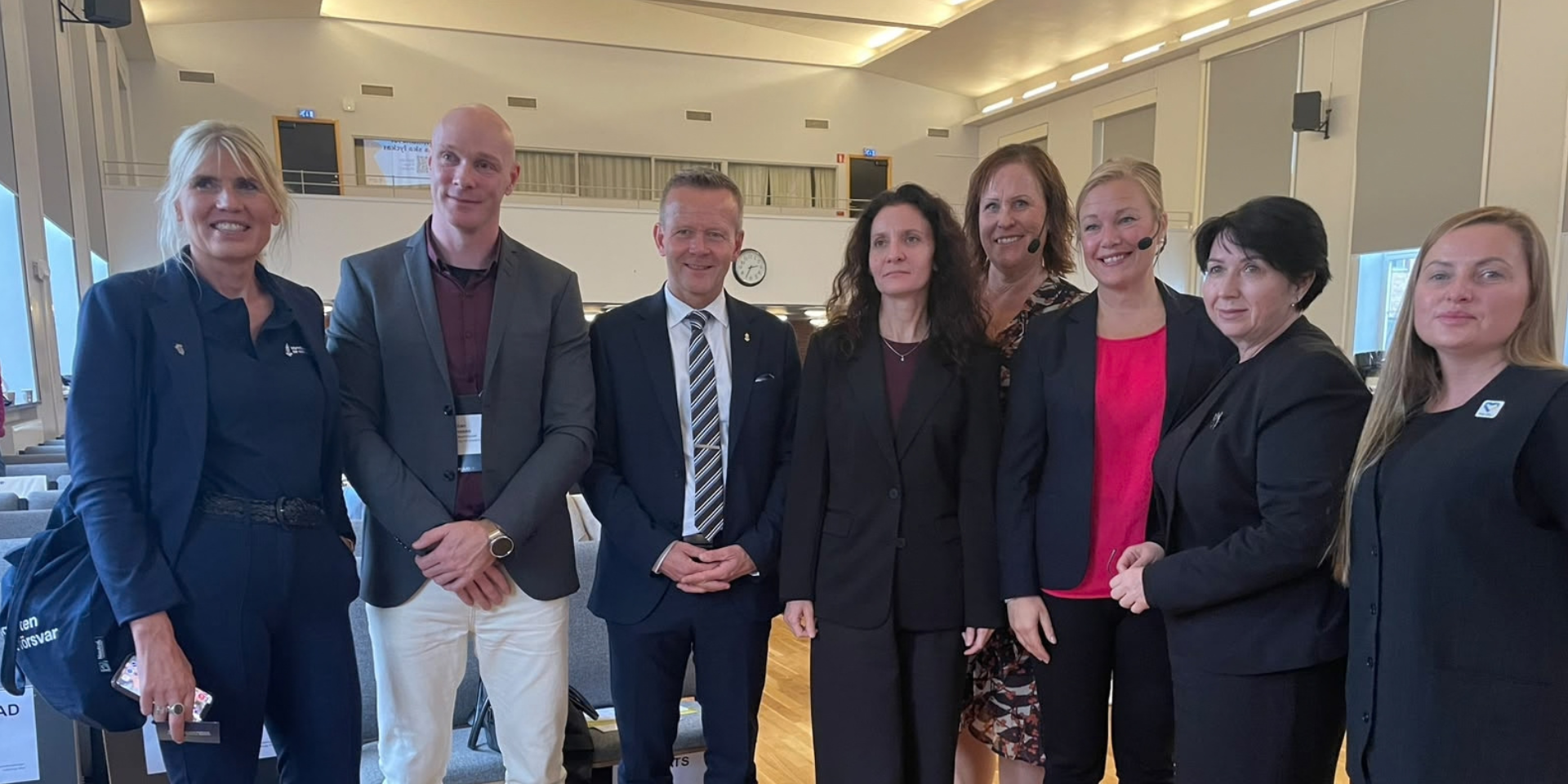
On 5 October, Help Ukraine Gothenburg (HUG) joined the Swedish Red Cross to welcome representatives of the Ukrainian Red Cross in Gothenburg. The meeting brought together organisations supporting people and communities affected by the war for professional exchange.
Volunteers at the centre
One of the central moments of the event was a panel discussion on volunteering during crises and war. The questions were practical: how do you recruit and support volunteers when everything around them is uncertain? How do the principles of the Red Cross Movement work in real life? And what can Ukrainian and Swedish organisations learn from each other?
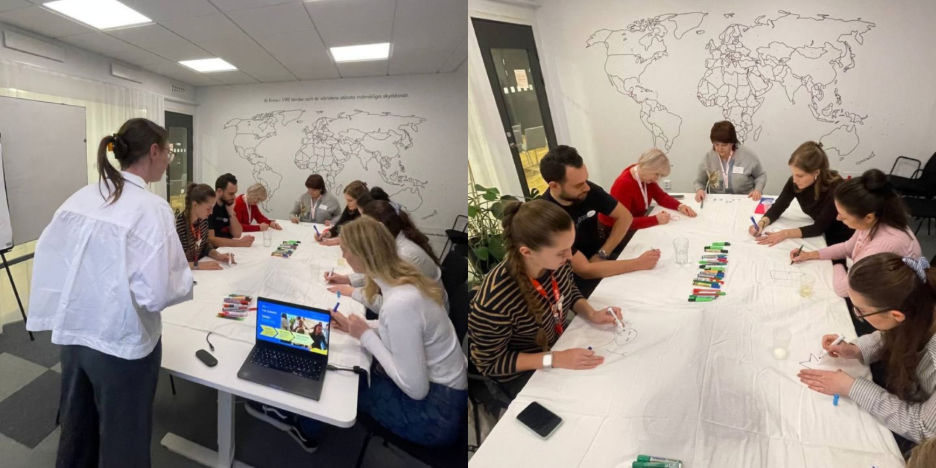
The HUG team led a workshop on how to empower young people through volunteering. We shared how our projects create a space where young people feel they belong and are supported, build life and professional skills, and start volunteering.
The core of the method is a path many young people recognise: from connection, feeling that you belong somewhere, to participation, taking part in volunteering and projects, and finally to agency, the sense that you can influence your own life.
Learning from each other make us stronger
Crisis response is built in local communities: by volunteers, small organisations and people who step up when something happens. That is why the exchange between those who work at this level is so valuable.
Ukraine's experience of responding to the consequences of the full-scale invasion can contribute to stronger preparedness, resilience and community capacity in Sweden. Swedish organisations, in turn, bring perspectives and methods that can strengthen work with Ukrainian communities.
The exchange gave us a chance to learn more about how other organisations and local branches work, connect with people in the field, share practical approaches, and explore opportunities for future cooperation.
A big thank you to the Swedish Red Cross for bringing us together, and to the Ukrainian Red Cross representatives and everyone involved for such a productive and inspiring day. We left with new perspectives, valuable connections and ideas to take forward in our work together.
In September, Olena Lohoniuk, principal, and Nadiia Yantseva, deputy principal of Kryvyi Rih Lyceum #4, came to Gothenburg for Beredskapsveckan, the national preparedness week. They shared what it takes to keep schools running in wartime with Swedish professionals working on civil preparedness and total defence.
In Sweden, "total defence" is a topic that has returned to the national agenda after decades of lower priority. The country has not taken part in a war for more than 200 years. Now municipalities, schools and agencies are asking practical questions. What happens when the power goes out? How do you keep essential services running? How do you reach parents when normal routines stop working?
Two days of experience exchange
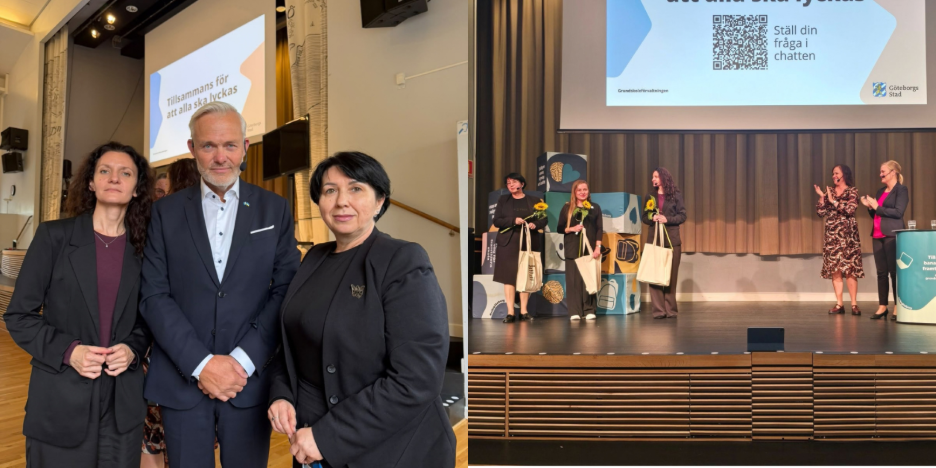
Together with Alla Tangstad, representative fro, HUG, the Ukrainian guests joined Göteborgs Stad's Chefsforum, a conference for Swedish school leaders with speakers including Jonas Attenius, Jan Eliasson, Mikael Frisell, Ida Texell, Kalle Sandhammar and Maria Andersson. The discussions moved from global developments to national and municipal perspectives, and finally to daily life in a school.
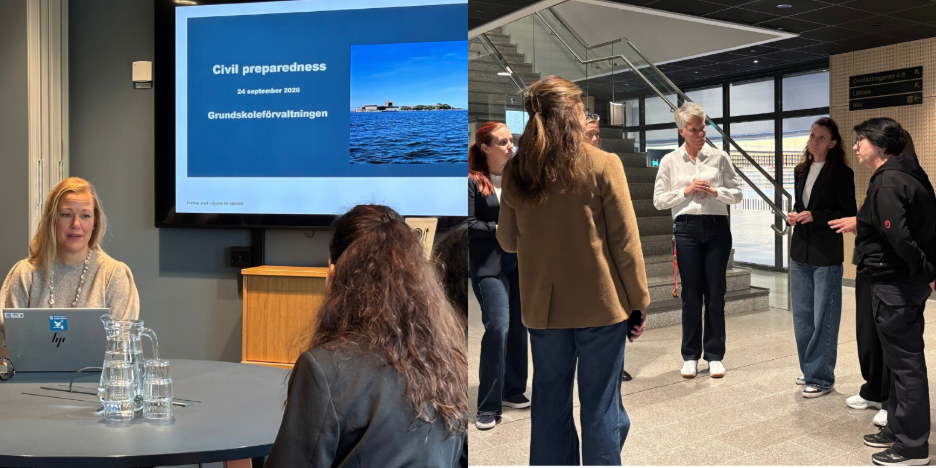
The following day, the conversation continued at Lundbyskolan with Annelie Börjesson and her colleagues Linnea Persson, Ellin Rosén and Marie Ahlén. The focus there was more practical: how a school keeps going when routines break down, how to organise communication, and how to act fast when the usual plan no longer works.
Annelie Börjesson, Security Development Officer at Göteborgs Stad's primary school administration, shared that the idea behind the day was to connect big-picture thinking with everyday reality. Preparing for the worst, she explained, also helps schools handle more likely disruptions such as extreme weather and long power cuts. And Sweden doesn't have to start from zero.
Experience that need to be heard
Ukrainian schools had to learn quickly: shelters, remote learning and psychological support for children became part of running a school.
"The most important things are the safety system and flexibility in how teaching is organised," Olena Lohoniuk says. "Ukrainian schools learned to adapt fast to crisis conditions. This is an experience worth passing on to our Swedish colleagues in the context of civil preparedness."
For the Ukrainian side, the exchange was just as valuable. Ukrainian schools can learn a lot from their Swedish colleagues, in particular their systematic approach to crisis management and their culture of students’ wellbeing.
"It showed me that safety isn't only about physical protection. It's also about creating an environment where a child feels calm and protected." - continues Olena.
HUG: connecting people and experience
The exchange was organised and facilitated by Help Ukraine Gothenburg (HUG), and is a part of a broader direction in the organisation's work: connecting people, expertise and experience across Ukraine and Sweden.
"Our role is not simply to bring people together, but to help turn Ukraine's practical experience into knowledge that responds to real needs in Sweden," says Alla Tangstad, project coordinator, HUG.
HUG identifies Ukrainian experts with relevant first-hand experience, connects them with Swedish colleagues and facilitates the exchange from start to finish. Strengthening Sweden's civil preparedness and total defence is one of the areas where Ukrainian experience can make the biggest difference right now.
"We see this as extremely important at this moment," Alla Tangstad says. "By sharing what we have learned, Ukraine and Sweden can strengthen each other and build more resilient societies."
Another truck carrying humanitarian aid is on its way from Sweden to Ukraine. This shipment includes medical equipment and supplies prepared for delivery and ready to support healthcare needs in Ukraine.
The delivery was made possible through the continued support of our partners, Sahlgrenska University Hospital, Lönns Truckar AB and Volvo Group, alongside the HUG volunteers who helped sort, prepare and pack the donated equipment. We are grateful to everyone who contributed their time and resources to make this shipment possible.
As Russia continues its attacks across Ukraine, civilians face growing risks and disruptions to essential services. Energy infrastructure remains a major target, while residential buildings, healthcare facilities and other civilian infrastructure continue to be damaged.
According to the UN Human Rights Monitoring Mission in Ukraine, at least 328 civilians were killed and 2,105 injured in September 2026 alone. Russian attacks on energy facilities in mid-October also temporarily left around 600,000 people in Kyiv without electricity.
With winter approaching, damage to electricity and heating systems threatens access to warmth, water and essential healthcare.
Help Us Prepare the Next Shipment
This delivery is one part of the ongoing effort to get essential resources from Sweden to the people and communities in Ukraine. As humanitarian needs grow ahead of winter, continued support is vital.
You can help make the next shipment possible. If you or your organisation can contribute medical equipment, supplies, transport or financial support, we would be glad to hear from you.
Drawing on the insights from HUG’s Better You&Me project, the article explores forced transnationality – the ongoing cross-border relationships, responsibilities, and decisions that people must navigate after being forced to leave their homes.
Family Life Across Borders
Russia’s full-scale invasion has drastically changed family lives of millions of Ukrainians: some people remain separated across borders, others have reunited, and some relationships have been collapsed by distance and uncertainty.
Many people who have settled in Sweden remain deeply involved in the lives of relatives and communities in Ukraine. They follow rapidly changing events, stay in daily contact, provide practical support and care, and make important family decisions from afar. These cross-border responsibilities have become part of everyday life, alongside work, studies, parenting, and building a future in a new country.
Forced transnationality takes many forms, raising children in Sweden while a partner remains in Ukraine, caring for older relatives from afar, or trying to sustain a relationship through prolonged separation; and its impact reaches far beyond practical arrangements. Each situation carries its own emotional strain, which, alongside integration pressures, can intensify anxiety, exhaustion, and depressive states.
A Family-Sensitive Approach to Recovery
In Better You&Me, support is delivered in the native language and shaped around calm, predictable settings. Participants can meet individually, join a group, or take part through drawing, listening and simply being present.
A family-sensitive approach starts with the story people bring with them and the pressure they carry. In individual conversations, participants can make sense of how separation has changed family roles, relationships and expectations for the future, and develop new strategies for supporting themselves. In group settings, they can share experiences and rebuild a sense of belonging.
For mental health professionals and community organisations, a family-focused understanding of displacement is essential. It helps create support that responds to people’s individual and collective needs, while recognising the cultural and national contexts that shape their experiences.
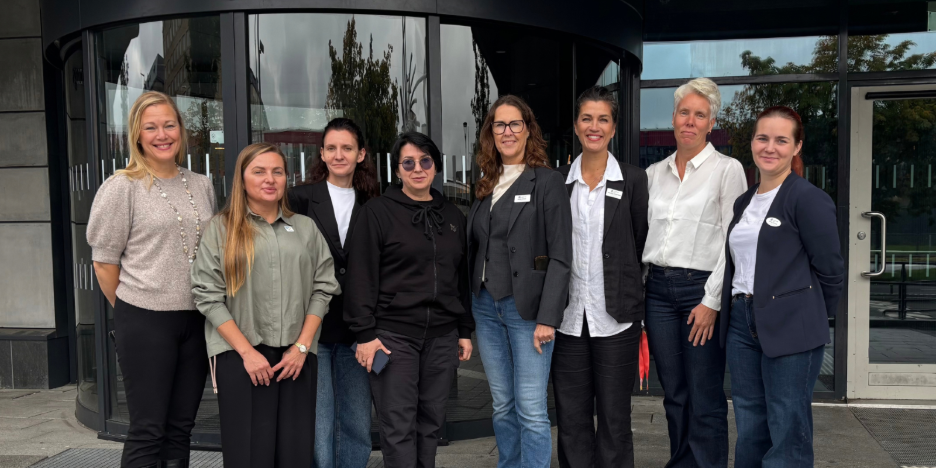
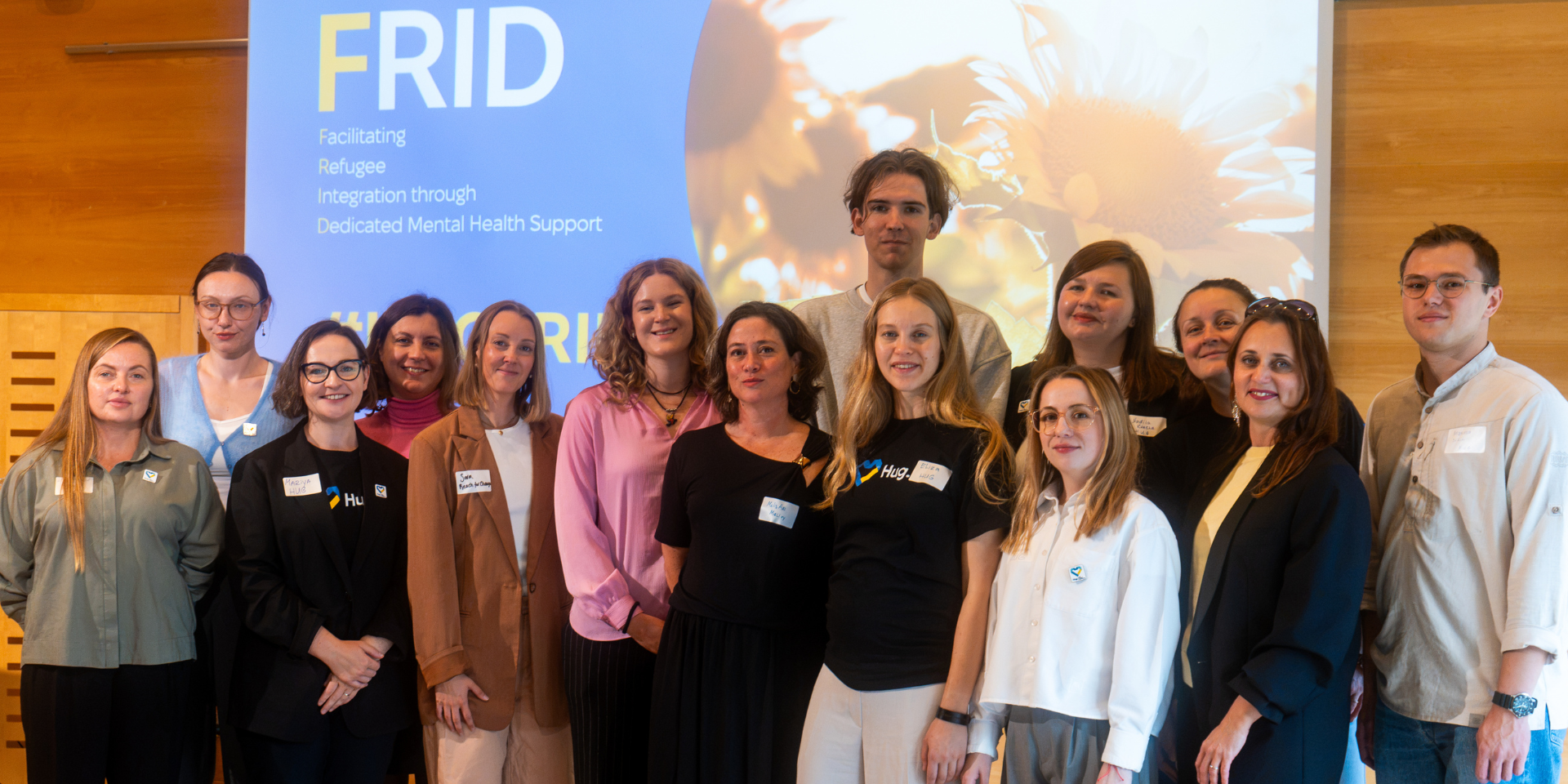
Anxiety levels among Ukrainian refugees in Sweden have risen in recent years – today, more than seven in ten report high levels of anxiety. At the same time, a recently completed pilot project shows that low-threshold, peer-support groups can help reduce isolation and strengthen participants’ mental wellbeing. The project Facilitating Refugee Integration through Dedicated Mental Health Support (FRID) has been implemented by Reach for Change, Help Ukraine Gothenburg (HUG) and MIELI Mental Health Finland since April 2025, involving a total of 134 people in Gothenburg, Kungälv, Trollhättan, Helsingborg, Lund and Eslöv. Participants describe reduced loneliness, new social networks and a sense of finally being able to speak openly, often for the first time since leaving Ukraine.
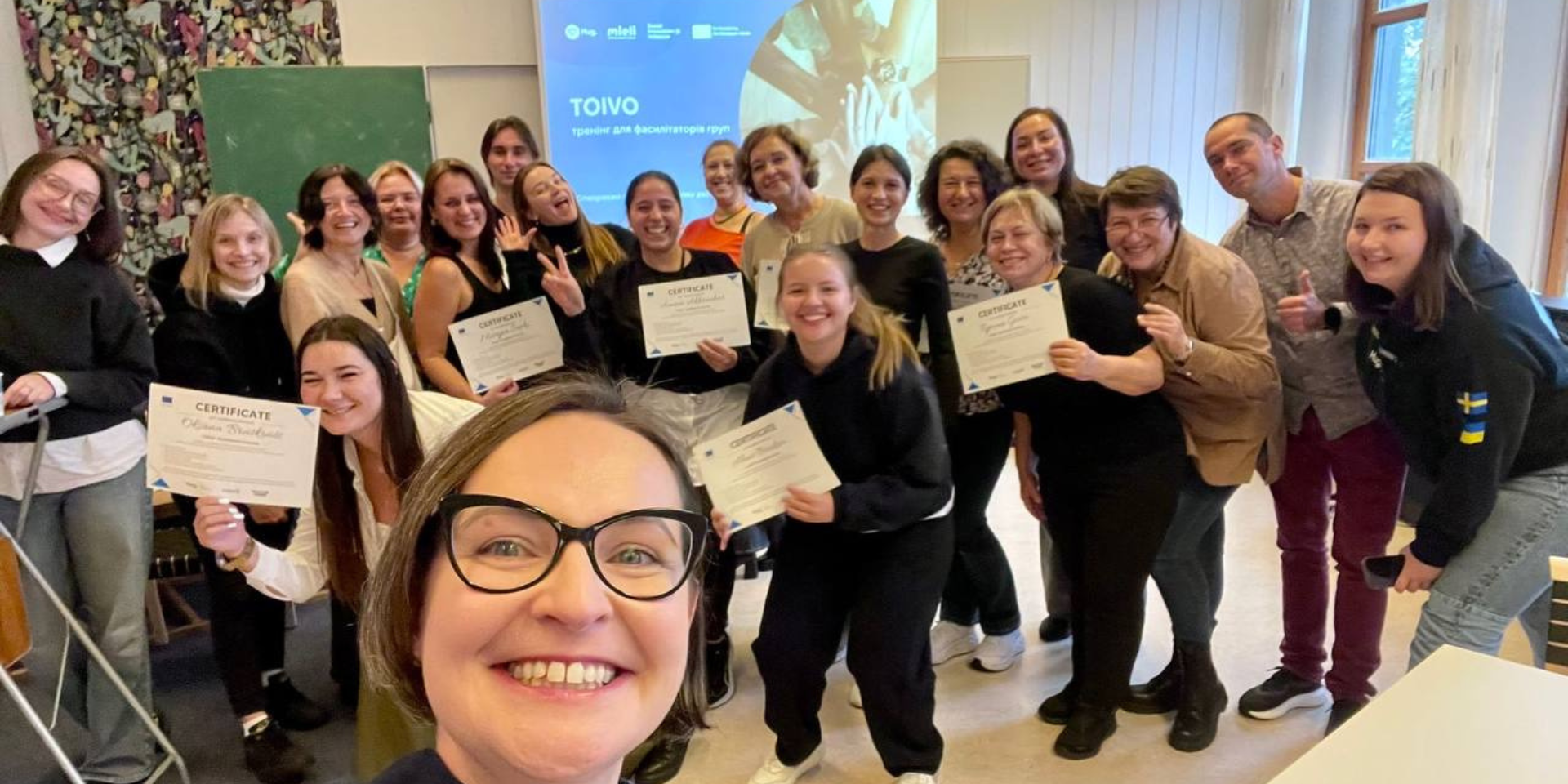
The FRID project used the TOIVO peer support group model, originally developed by MIELI Mental Health Finland for migrant communities in Finland. Each group was led by two trained facilitators, who were also from Ukraine. Participants met once a week for eight sessions. Each meeting combined a shared activity, such as cooking, sports, museum visits or creative activities, with guided reflection on the experience, following the principle “Act/Do - Feel - Reflect”. The approach was adapted to the Swedish context and to the specific needs of Ukrainian participants through collaboration between MIELI Mental Health, Help Ukraine Gothenburg (HUG) and Reach for Change. In total, 134 people took part in the project from Gothenburg, Kungälv, Trollhättan, Helsingborg and Lund between October 2025 and May 2026.
“It was a very important and emotional experience for me, because I realised how important community is for people to feel well. And how small steps and interventions can make such a huge difference to people’s wellbeing and support them in their everyday lives,” says Halyna Romanuik, TOIVO group facilitator, Gothenburg.
Since Russia’s full-scale invasion of Ukraine in 2022, around 49,000 Ukrainians have been granted temporary protection in Sweden. An earlier survey from 2024 by Help Ukraine Gothenburg found that more than half of respondents felt lonely and almost eight in ten experienced high levels of anxiety, an increase from 68 percent in 2023*. At the same time, access to support through the regular healthcare system is often limited by waiting times, a lack of care available in Ukrainian, and complex pathways into the system.
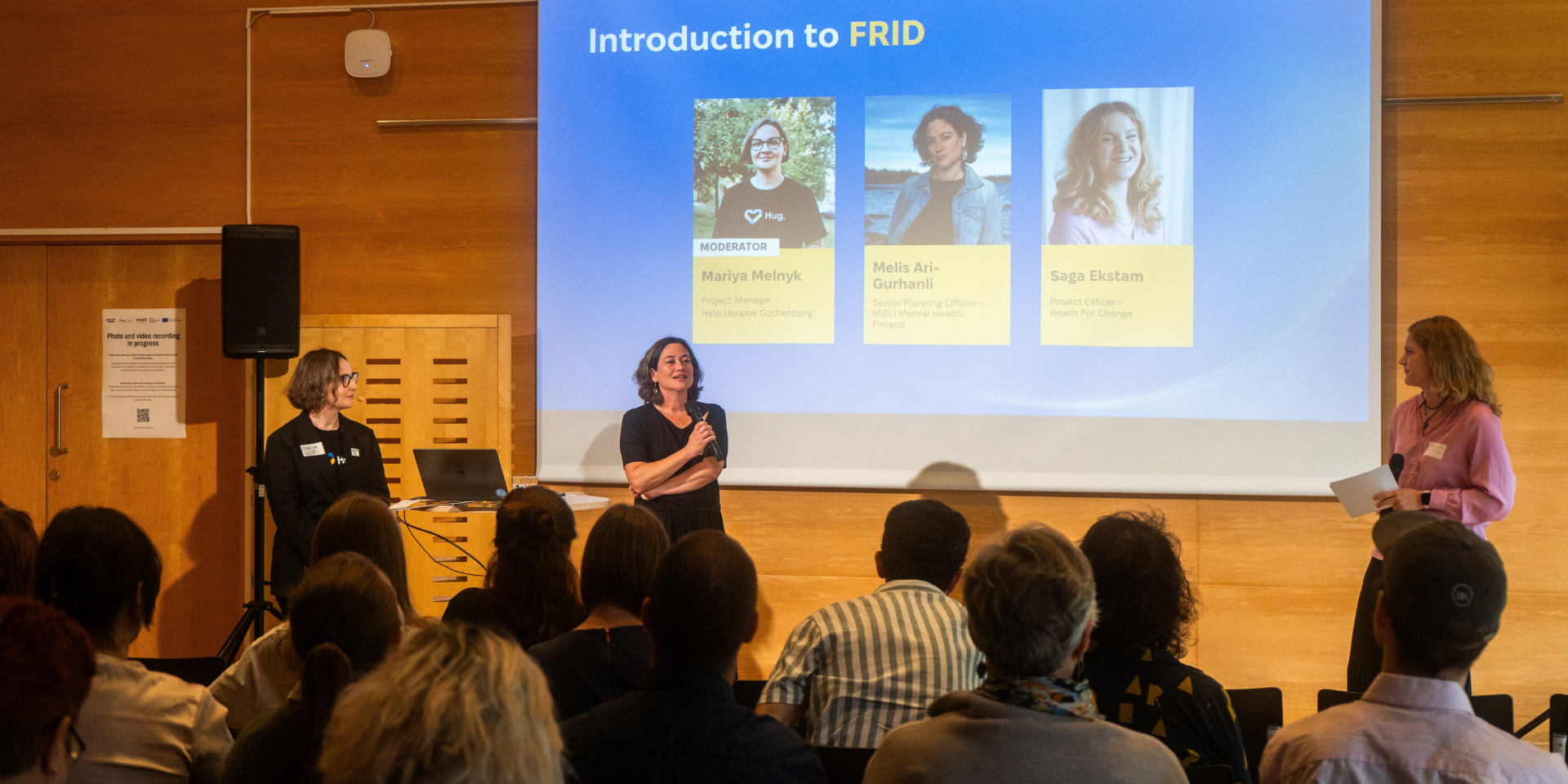
“In the evaluation of the project, all participants confirmed that they had made at least one small change in their daily lives that contributed to improved wellbeing, and we saw the same positive effect among the facilitators. It is a clear demonstration of the power of the approach, when people are given the opportunity to support others, it also strengthens their own wellbeing,” says Mariya Melnyk, Project Manager, Help Ukraine Gothenburg.
“Seeing the TOIVO model work just as well outside Finland, with a new target group and within a different welfare system, was incredibly rewarding and inspiring for us. It demonstrates the potential of the model and how it can be adapted to serve different needs. These are insights and knowledge that other countries and organisations can now build on,” says Melis Ari-Gurhanli, Senior Planning Officer, MIELI Mental Health Finland.
FRID has been funded through the EU’s ESF+ Social Innovation+ initiative and will formally conclude in October 2026. Looking ahead, Reach for Change, HUG and MIELI hope that more organisations will make use of the model. The report now launching publicly has been designed as a practical guide for organisations looking to implement the approach.
“This project shows clearly what social innovation can achieve: new, accessible and low-threshold support tailored to the needs of a specific group, filling a gap that traditional healthcare often has limited capacity to address. But we could not have achieved this on our own. This is the result of bringing together our different areas of expertise and having the courage to build something new together,” says Saga Ekstam, Project Manager, Reach for Change.
*Based on the survey conducted by HUG. Read the full report: Report
The full report is available for download here: Report
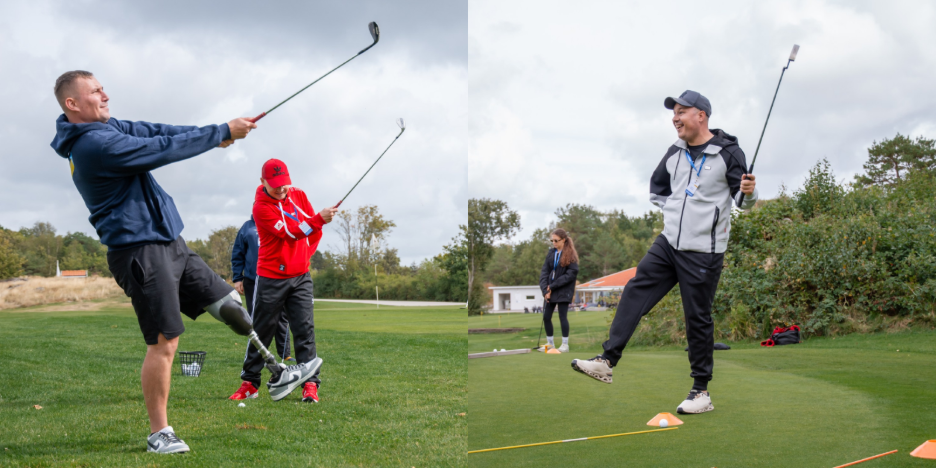
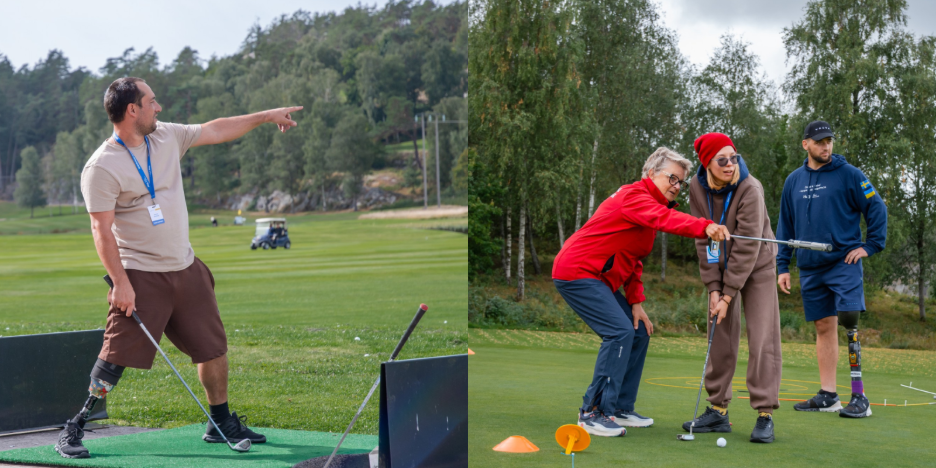
At HUG for Heroes, we use physical activity as a tool for recovery and reconnecting with yourself. Through movement, veterans learn to release tension in the body, calm the mind, restore energy, and rediscover what their bodies are capable of. Just as importantly, adaptive sport creates space to experiment.
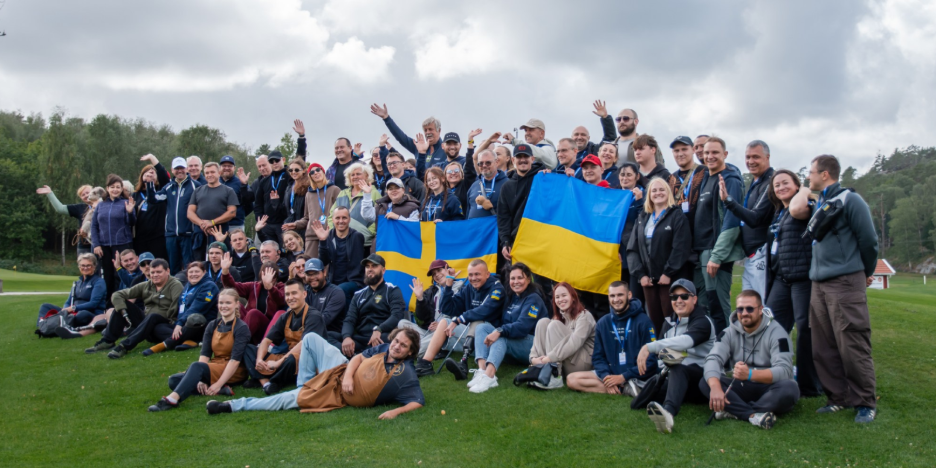
Together with our participants, we spent a day at Tjörn Golf Club - and for many, it was the first time trying this activity after injury.
Golf is often seen as a game of precision, but here it becomes something deeper - a practice of balance and patience. It also has a quiet, meditative side. Standing on the green, our participants describe a rare kind of calm: a moment where the mind stops racing and simply follows the ball.
Adaptive sport gives veterans a safe space to explore those possibilities. It can help rebuild a sense of agency, confidence and enjoyment in movement - and remind participants that an active life can take many different forms.
Thank you to Svenska Golfförbundet andTjörn Golf Club for creating such an amazing day for HUG for Heroes!
In 2022, many Ukrainians came to Sweden with one thought in mind: this is temporary. They would stay safe, wait for the war to end, and return home. Four years later, that temporary reality has lasted long enough to become something else.
More than 60% of Ukrainians in Sweden have found some form of employment. Many have learned Swedish, started working or studying, and built everyday lives here. In other words, people have adapted to their new reality. But the conditions around them have not always adapted at the same pace.
For many Ukrainians, the future still comes with uncertainty:
How long can I stay? What should I plan for? Is it worth investing in education? Can I make long-term decisions about work, housing or my children’s future?
These questions may sound administrative. Their consequences are not.
Mental wellbeing is closely connected to our sense of stability, belonging and ability to plan our lives. Living with prolonged uncertainty can affect all three - especially when there is no clear timeline for when that uncertainty might end.
This is an area HUG has been working with since 2023. Through our mental health and community-based programmes, we have worked directly with Ukrainians experiencing uncertainty, isolation and difficulties with integration.
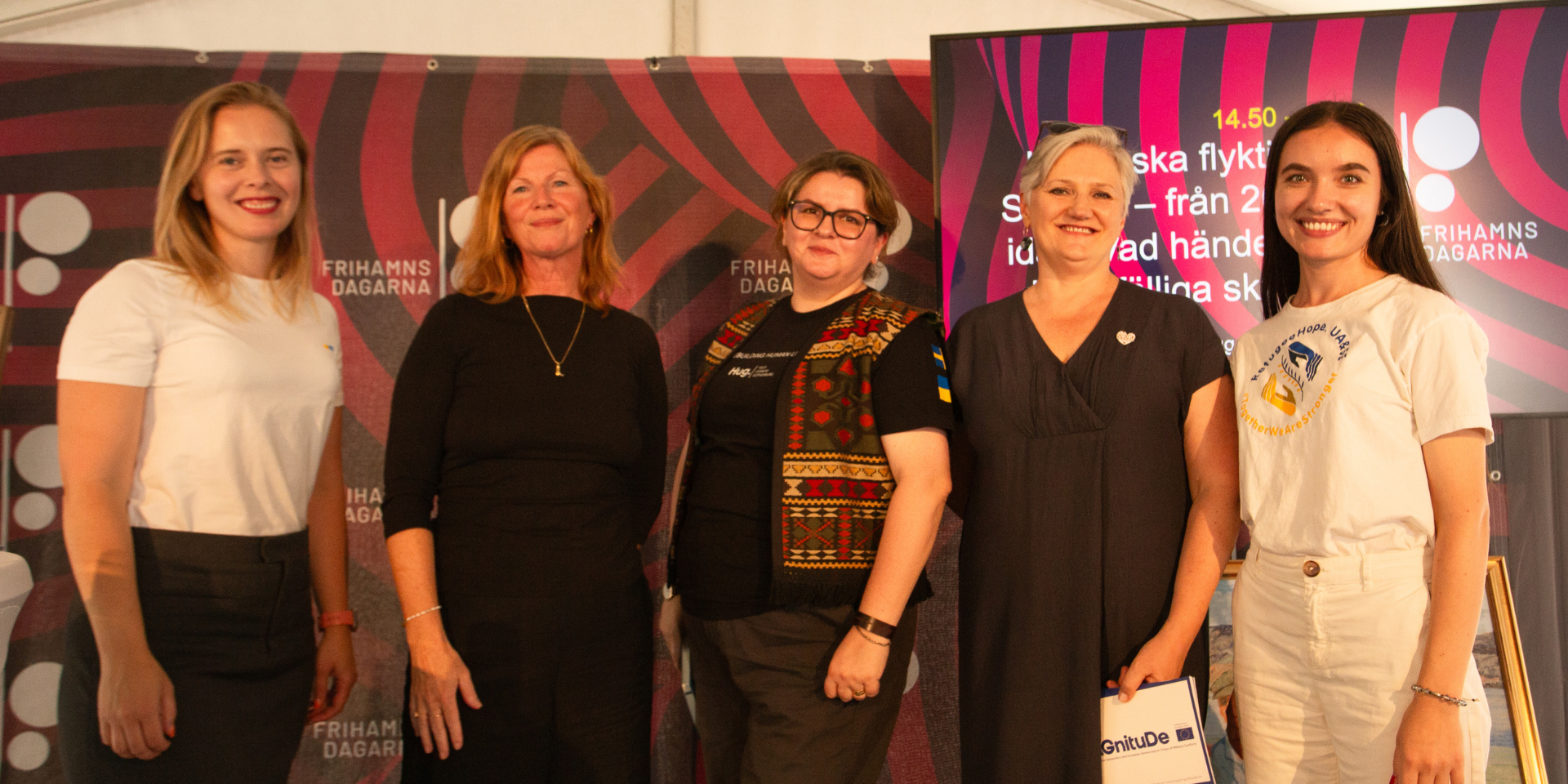
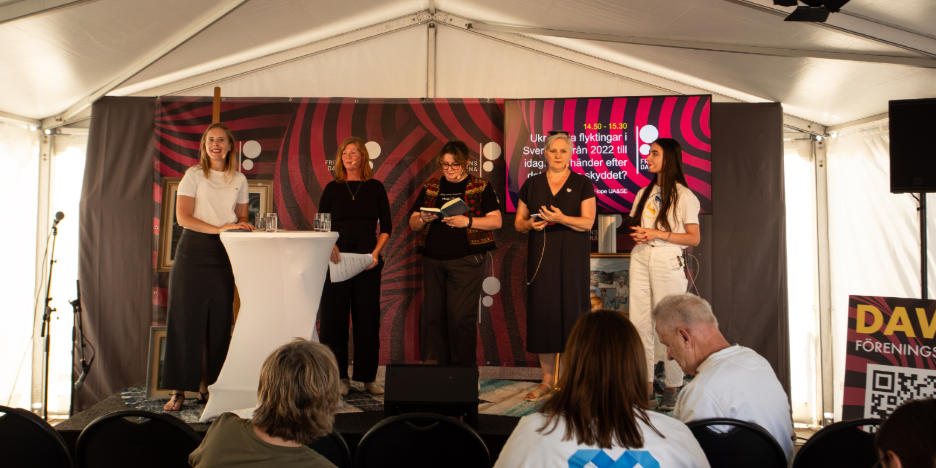
At Frihamnsdagarna, HUG co-founder Kateryna Aleksandrova brought this practical experience into a wider conversation, joining Veronica Liliedahl, Oksana Shmulyar Gréen, Khrystyna Hevchuk and Nataly Lamkén to discuss what prolonged uncertainty means for Ukrainians in Sweden.
The discussion explored how uncertainty affects wellbeing, how integration challenges can add to mental health pressures, and how different rules and circumstances shape people’s lives depending on when they arrived.
For HUG, taking part in conversations like this is an opportunity to bring the experience from our programmes and work with communities into a broader public dialogue — connecting what we see on the ground with research, policy and lived experience.
When a temporary situation lasts for years, it is no longer enough to ask how people are coping with it. We need to ask whether the systems around them are keeping pace with the lives they are already building.
Thank you to everyone who joined us at the discussion, and to Frihamnsdagarna for creating space for this conversation.
Last week, HUG hosted a screening of "Capable" - a documentary directed by Kadim Tarasov and produced by Andrii Rizol, as part of the international Empowered UA film marathon. The film tells the story of Ukraine during the full-scale war - a country defending its freedom while continuing to create, protect human rights and shape its place in Europe. Through the stories of artists, musicians and human rights defenders, "Capable" shows another side of Ukraine: its ability to create, lead and move forward even in the face of war. At HUG, we see cultural and educational events as a way to build a more informed and connected Ukrainian-Swedish society. Bringing stories like these to Sweden creates opportunities to see Ukraine from different perspectives and engage with the people and ideas shaping the country today. The war is central to understanding Ukraine today, but it is not the only story Ukraine has to tell. Who we are, what we create, what we believe in and how we shape our society are also part of that story. Thank you to everyone who joined us, and to the "Watch Ukrainian!" Association, Сhаritable Foundation «MHP-Hromadi» and the Ministry of Foreign Affairs of Ukraine for bringing the Empowered UA film marathon to audiences in Sweden.
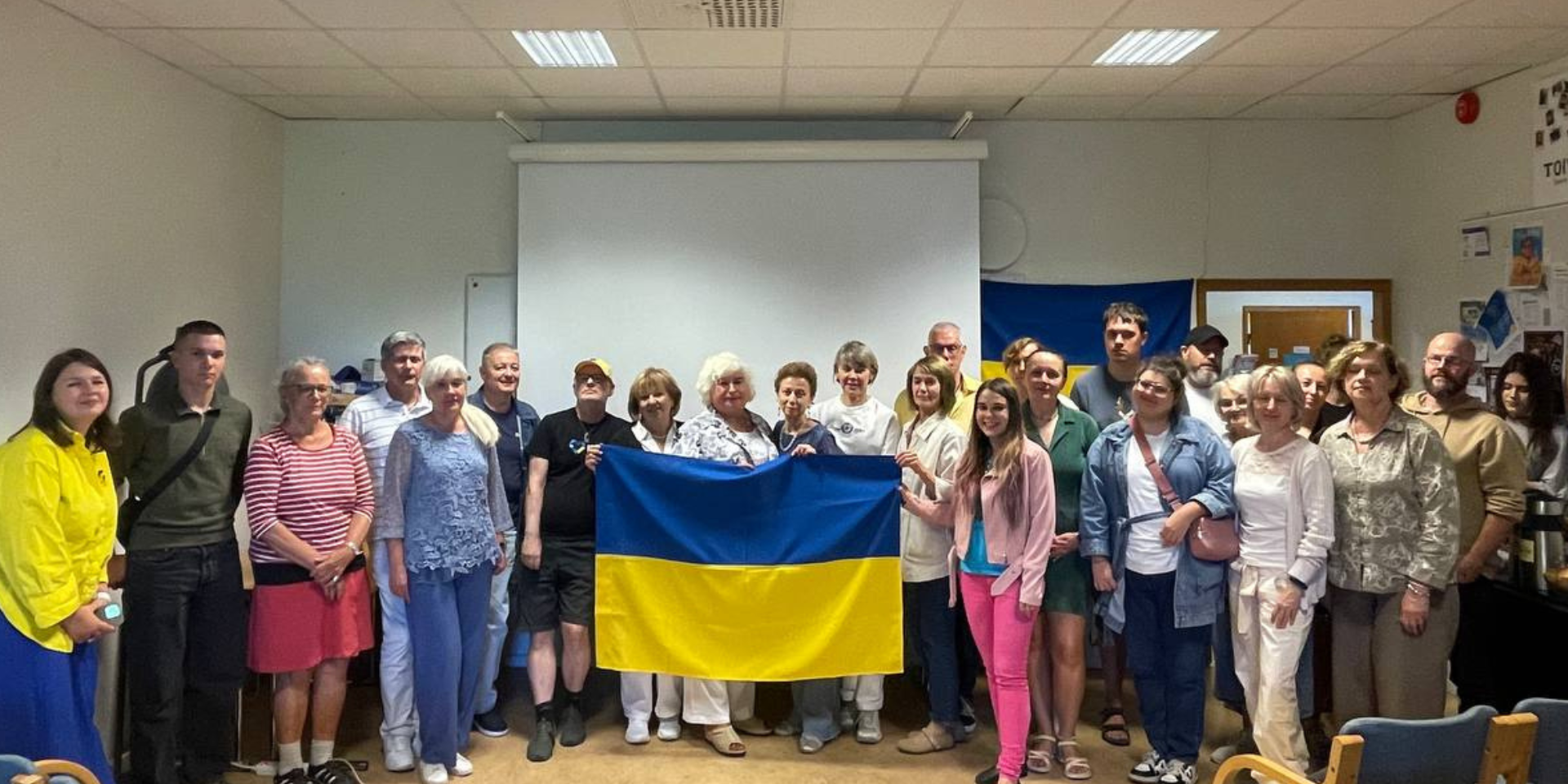
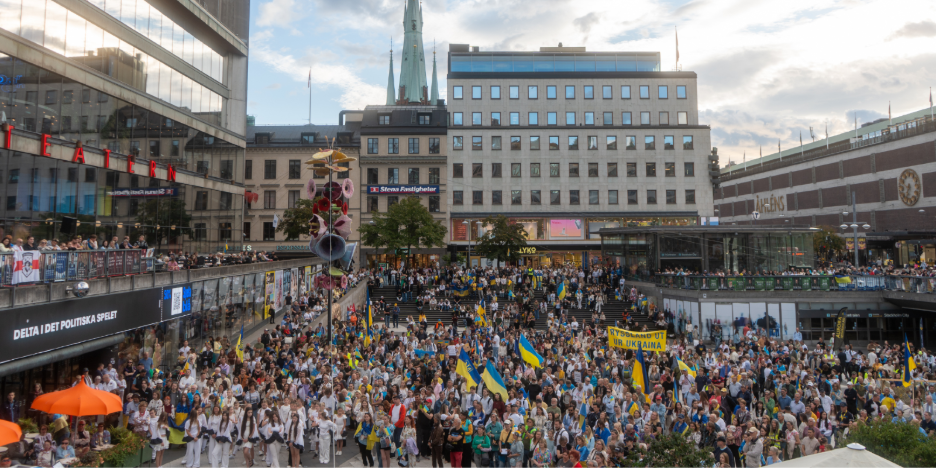
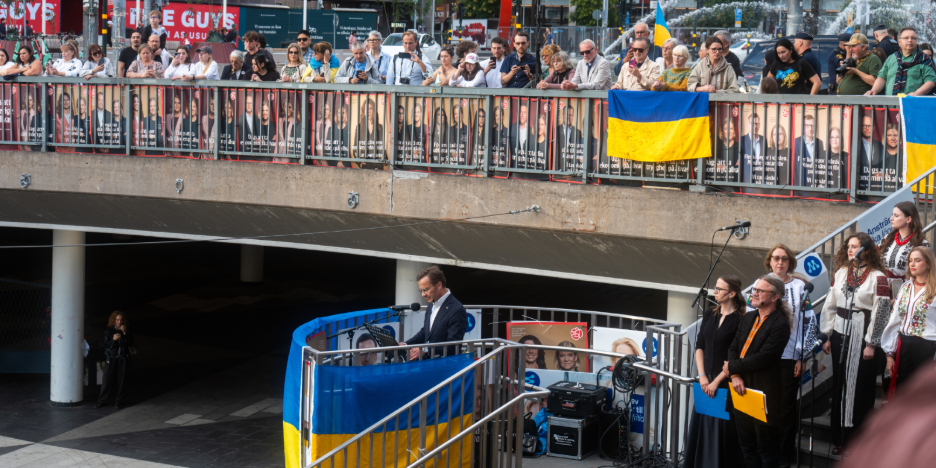
On 24 August, Ukraine marked 35 years of independence. For Ukrainians around the world, Independence Day is both a celebration of the country’s freedom and a reminder of the ongoing effort to defend it. This year, the HUG team joined the celebrations in Stockholm, alongside representatives of Ukrainian organisations and initiatives from across Sweden.
HUG team visited Unity Hub Stockholm - a space created to connect Ukrainian organisations and initiatives, strengthen cooperation and bring together resources and opportunities for the Ukrainian community in Sweden. There, Ukraine’s Ambassador to Sweden, Svitlana Zalishchuk, spoke about what independence means today, and the price still being paid to defend it.
The celebrations then continued with a march through Stockholm. Hundreds of people walked through the city under Ukrainian flags, before gathering at Sergels torg for a concert and speeches marking Ukraine’s Independence Day.
What stood out most for us was seeing so many Ukrainian organisations and initiatives come together. Different backgrounds, different areas of work, different experiences - but one shared purpose to support Ukraine.
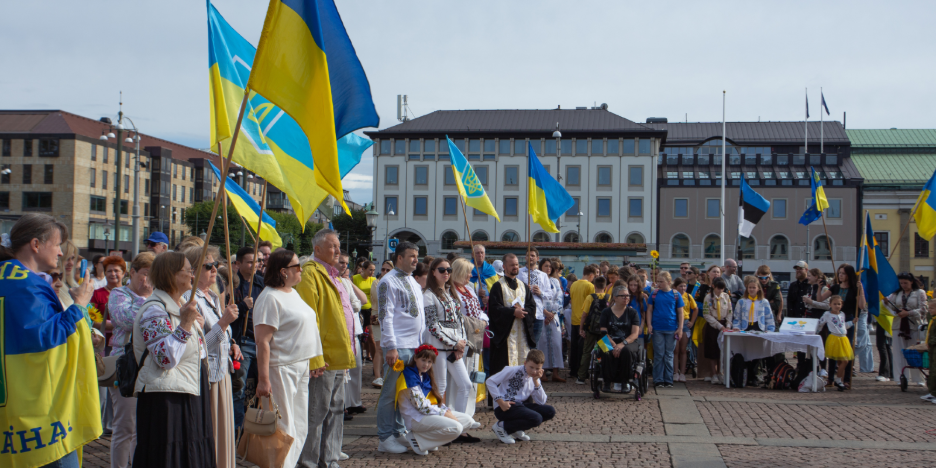
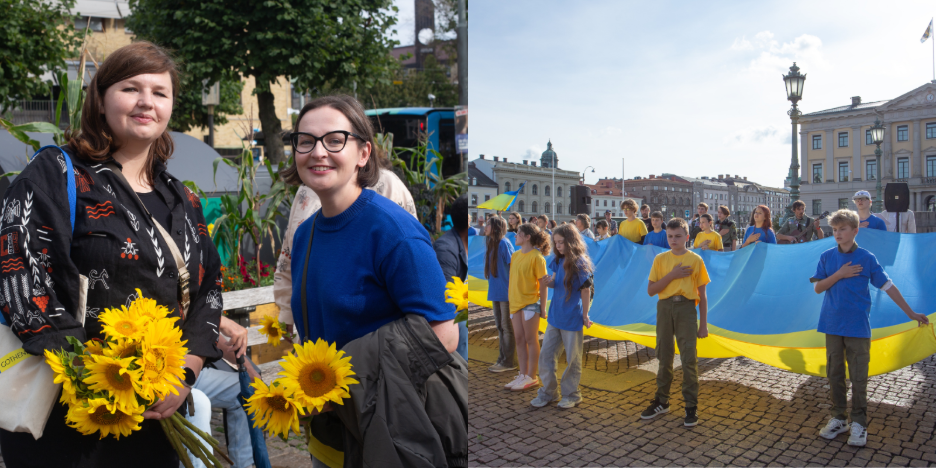
On Sunday, 23 August, the HUG team joined the event marking 35 years of Ukraine's independence in Gothenburg, organized by Gothenburg Stands With Ukraine, the local Ukrainian community, Plast Ukrainian Scouts, and Ukrainian School Vinochok.
At Gustav Adolfs Square, the contrast was hard to miss. Ukrainian flags filled the space, music played, and families gathered to celebrate. Meanwhile, in Ukraine, people woke to air raid sirens — families waiting for news from the front, another night bringing drones and missiles over Ukrainian cities.
HUG co-founder Kateryna Aleksandrova spoke about this contrast, and why independence matters so deeply when it is still being defended every day:
"Independence lives in a child who keeps going to school despite air raid sirens. In a business that opens in the morning after a night of attacks. In a doctor who keeps working when the power goes out. Ukraine is not a country waiting for the war to end before it starts living again. Ukraine lives now."
During the event, we were honoured to present the HUG for Heroes photo exhibition, sharing the stories of Ukrainian veterans and their lives after the front.
The exhibition offers a glimpse into the people behind the word “veteran” - their experiences, challenges, strength and the new realities they are building around themselves. It is also part of our effort to bring Ukrainian veterans’ voices into Swedish society and create more space for their stories to be seen and understood.
Having the opportunity to display the exhibition at such a meaningful public event in Gothenburg was especially important to us. Independence is not an abstract idea for the people portrayed in these photographs. It is something they have defended, and something they continue to carry with them into the next chapter of their lives.
The HUG for Heroes exhibition is available to be shown at other events, organisations, schools, workplaces and public spaces. If you would like to host the exhibition or explore an opportunity to bring these stories to your community, we would be happy to hear from you.
Thank you to everyone who joined us and showed their support for Ukraine. We HUG you! 💙💛
We are always glad to hear from our partners in Ukraine that humanitarian aid has arrived safely and is reaching the people who need it.
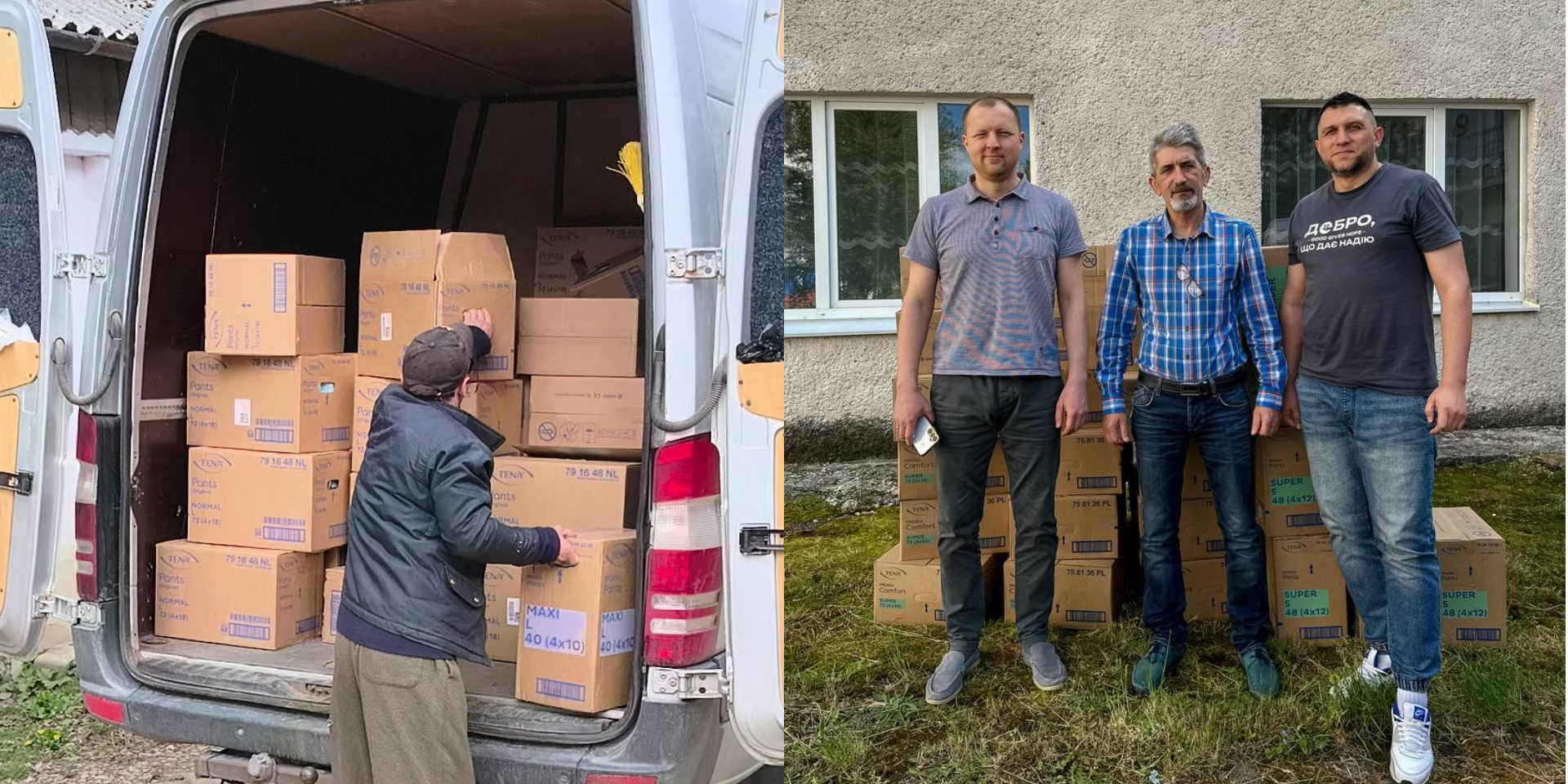
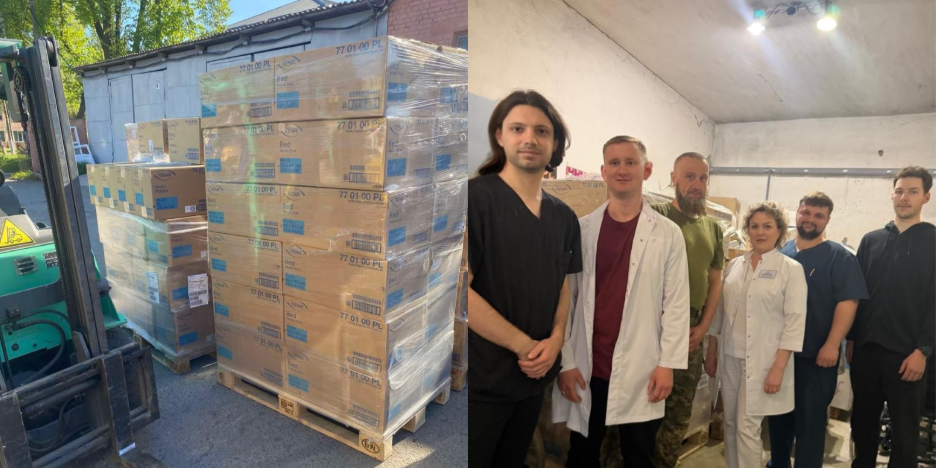
This time, HUG delivered essential hygiene supplies to the Dnipro region. The donation reached an organization providing social and psychological support to around 1,000 children across the region, as well as a specialized veterans’ hospital providing medical, psychological and rehabilitation care for military personnel and veterans.
The war continues to place enormous pressure on local organisations and healthcare services. Access to essential supplies helps them meet everyday needs and continue providing care to people whose lives have been deeply affected by the war.
We are very grateful to Essity for making this donation possible and to our partners in Ukraine for ensuring that it reaches the people and facilities that need it.
Every delivery is part of a wider effort to strengthen the local organisations and services that continue providing essential care to people affected by the war. 💙💛
Help Ukraine Gothenburg delivered a large humanitarian donation from our partners at Essity to hospitals and healthcare facilities in the Chernivtsi region of Ukraine. 🇺🇦
The shipment included essential hygiene supplies for people receiving medical treatment, rehabilitation and long-term care. The supplies were delivered to hospitals providing emergency and planned care for adults and children, facilities providing rehabilitation and palliative care, as well as institutions supporting older people and people with disabilities.
Humanitarian support is often associated with the most urgent needs. But it is also about the everyday things that make healthcare and care possible. By helping provide these essentials, we support local facilities in the important work they do every day.
We are grateful to Essity for making this support possible and to our partners in Ukraine for keeping us updated as the humanitarian aid reaches the facilities that need it.
We continue working together to support Ukrainian healthcare and communities affected by the war. 💙💛


.png)


.png)


.png)
.png)
.png)
.png)
.png)
.png)