The Holodomor of 1932–1933 was a genocide of the Ukrainian nation, carried out by the totalitarian Soviet regime to suppress the Ukrainian people and eliminate resistance to Ukraine's independence. Already at the beginning of the 20th century, Ukrainian statehood was destroyed after the division of territories between Poland, Lithuania, and the Russian Empire. In the next two centuries, Ukrainians were subjected to harsh colonization, Russification, and persecution for their national identity. The independent Ukrainian People's Republic, established in 1918, lasted only a few years, after which the Ukrainian lands were occupied by the Bolsheviks, who established a communist totalitarian regime.
In 1922, the Union of Soviet Socialist Republics (USSR) was formed, which included the Ukrainian SSR. Despite declarations of equality of the republics, the Kremlin effectively controlled Ukraine, viewing Ukrainian national identity as a threat to the existence of the Soviet state.
In 1928, the Soviet authorities announced a policy of collectivization - the unification of private peasant farms into collective farms. Ukrainian peasants, known for their strong sense of individualism and national identity, actively resisted. About 4,000 uprisings and protests were recorded, which the Kremlin decided to suppress by force. The authorities used coercion, terror and propaganda against "kulaks", "bourgeois nationalists" and "counter-revolutionaries", and those who refused to obey were physically destroyed.
It was forbidden to leave Ukrainian villages for the cities, as well as for other republics of the USSR. People were literally locked in the territory of starving Ukraine and the Kuban - 22.4 million people were trapped.
Blackboards: villages and collective farms that did not fulfill the grain procurement plan were listed on the "blackboards". This meant a complete blockade: confiscation of all products, a ban on trade, and the surrounding of peasants by the military, NKVD bodies, and police.
Laws on Five Ears of Wheat: for harvesting grain and products that remained in the field, peasants were punished with death or 10 years of imprisonment with confiscation of property.
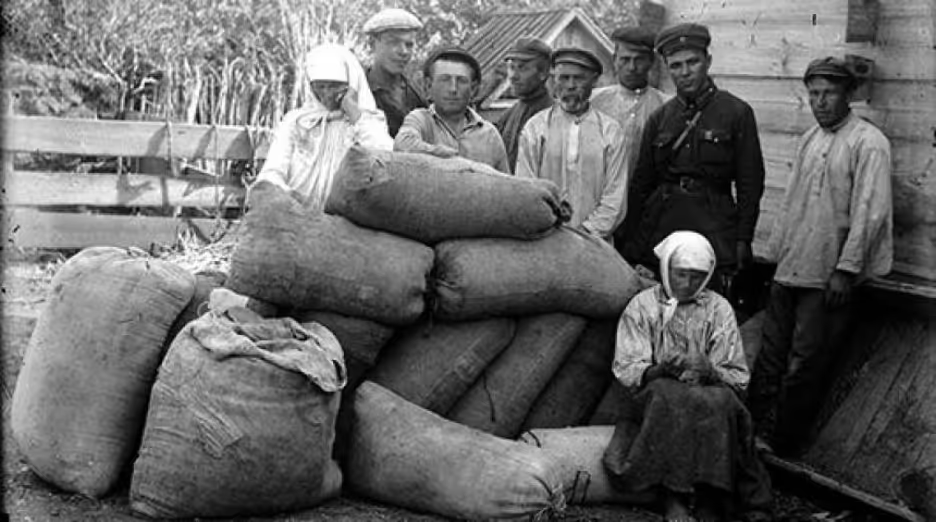
Seizure of grain and food: not only grain was seized from villages, but also other food and property that could be exchanged for food.
Propaganda and concealment of the famine: the Soviet authorities denied the existence of the famine, refused aid, censored information, and forced people to falsify the causes of death - "typhus", "exhaustion", or "old age".
In the spring and summer of 1933, mortality reached catastrophic levels:
28,000 people daily,
1,168 people hourly,
20 people every minute.
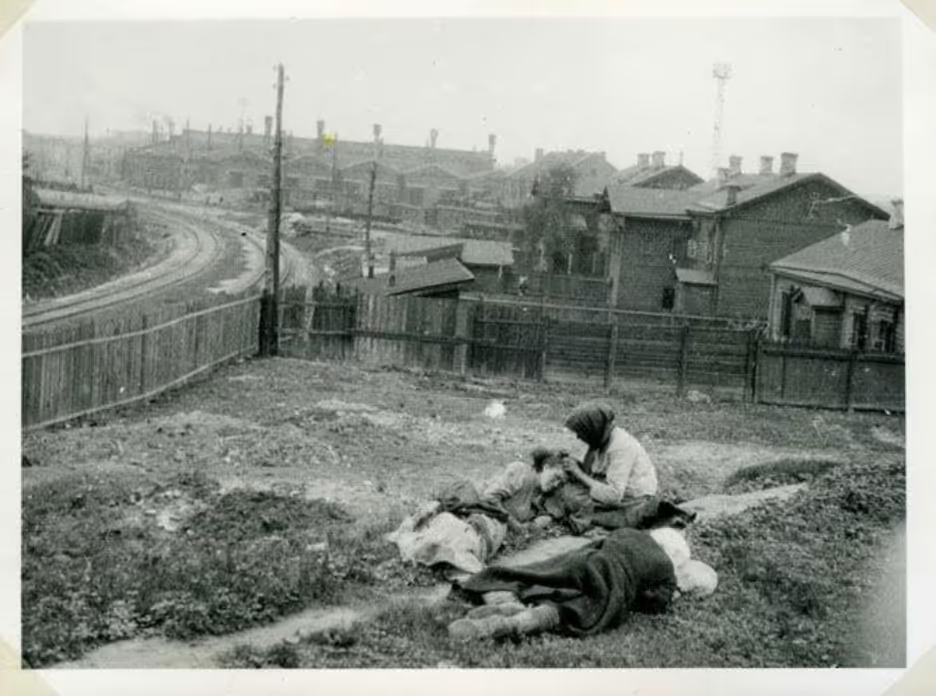
Millions of Ukrainians died. The authorities forbade documenting the cause of death as “hunger,” and certificates indicated “typhus,” “exhaustion,” or “old age.” Today, historians are restoring the true numbers and lists of victims. The total losses reached millions of Ukrainians.
The most vulnerable were children, the elderly, and peasant families. Many people died on the streets and in their huts from exhaustion and diseases exacerbated by hunger. Secret lists of village councils indicate that the real number of victims is twice as high as the official figures.
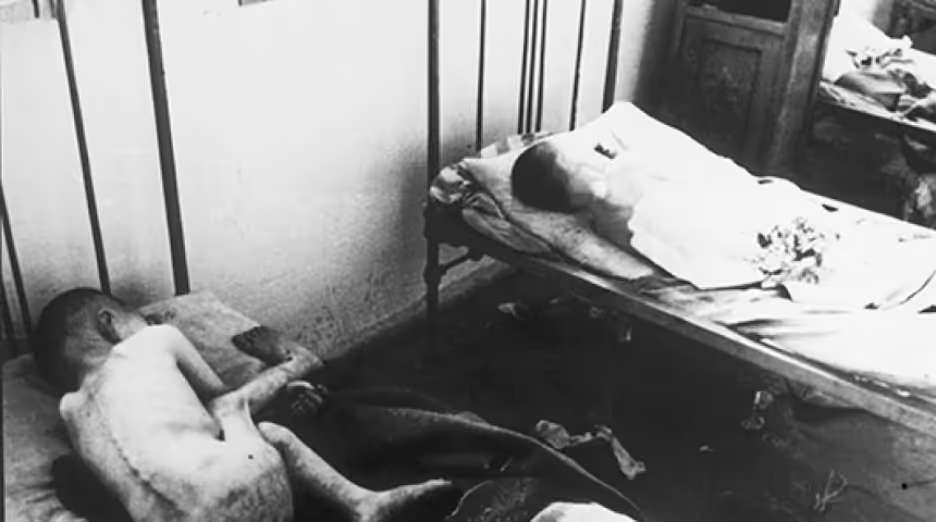
The Holodomor was a targeted genocide: the Ukrainian peasantry was destroyed as a source of spiritual and material strength of the nation. Stalin and his entourage realized that the Ukrainian peasants were the bearers of traditions, culture and language, and their destruction would weaken the Ukrainian national identity. All this happened at a time when the USSR had large stocks of grain in state reserves, and large-scale food exports abroad were also ongoing. Such a policy of the totalitarian regime indicates a deliberate intention to destroy part of the Ukrainian nation in a specific and controlled period of time.
In 2006, Ukraine officially recognized the Holodomor as genocide of the Ukrainian people. The 2010 resolution of the Kyiv Oblast Court of Appeal confirmed the genocidal nature of the crime and the intentions of Stalin, Molotov, Kaganovich, Postyshev, Chubar, Khataevich, and Kosior. The memory of the Holodomor lives on in museums, thematic exhibitions, lessons, and publications.
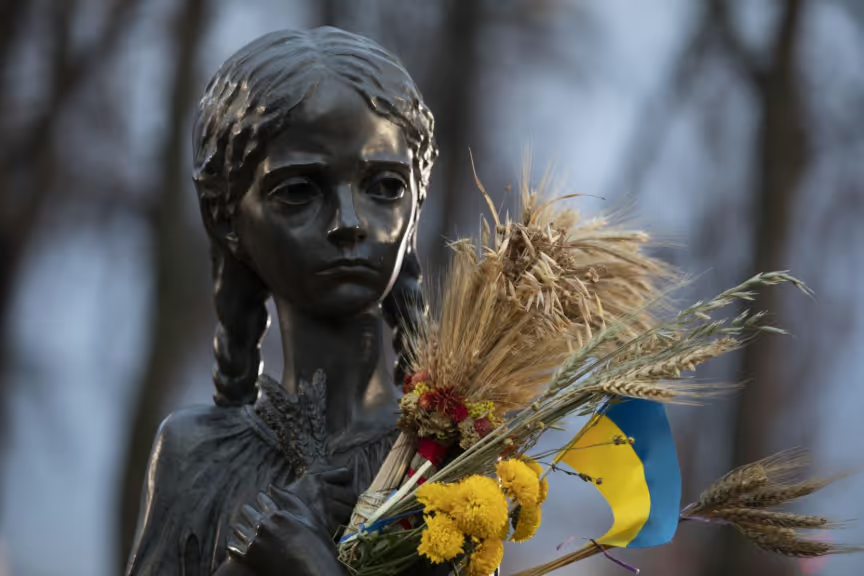
Every year on the last Saturday of November, Ukraine holds a memorial service - people light a candle in their window in honor of the millions of victims. The trauma of the Holodomor still lives in the collective memory of Ukrainians, passed down through generations as pain and warning.
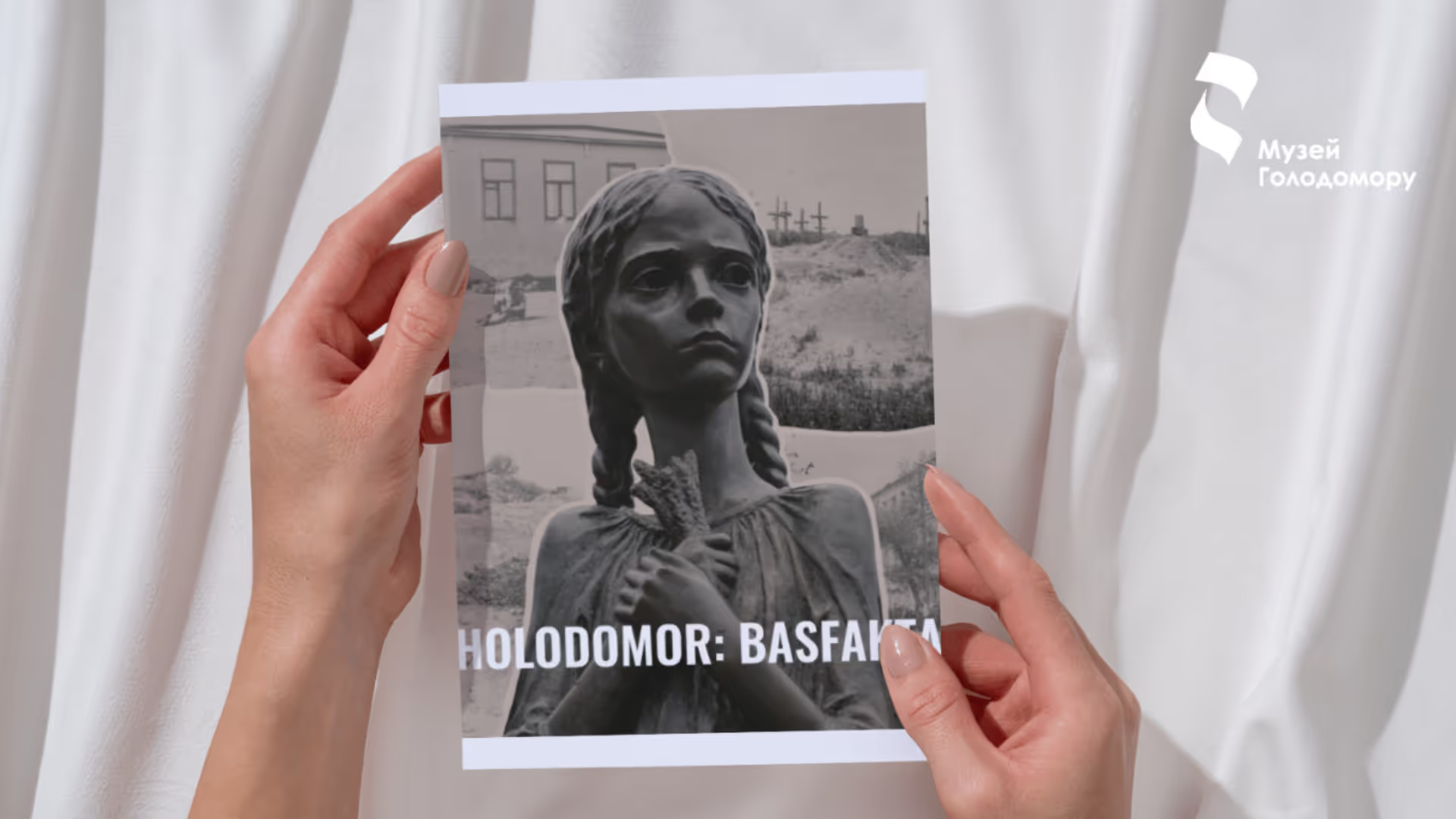
“The Holodomor: Main Facts” has been expanded to include a Swedish-language version! You can download, print, and use the publication for educational activities within the relevant language environment.
The translation into Swedish was done by the Nordic Ukraine Forum, a Swedish-Ukrainian organisation that aims to build bridges between Sweden and Ukraine. The organisation is engaged in advocacy and, in particular, is actively working to ensure that Sweden recognises the Holodomor as genocide of the Ukrainian people.
At HUG - Help Ukraine Gothenburg, we have books in Swedish about the Holodomor that you can borrow to read in our mini-library. They help Swedes understand the history and scale of the tragedy, as well as raise awareness about the crimes of the totalitarian regime.