Safe group meetings that encourage open conversation, mutual understanding, and emotional support.


Within the FRID project, we are adapting and piloting the TOIVO model for Ukrainians in Sweden. TOIVO is a peer-support group methodologydeveloped by MIELI Mental Health Finland, designed to offer people a safe and supportive space to reflect on their well-being together.
The Finnish word toivo means hope — capturing the essence of the group experience. At its core, the model encourages small, practical steps that help people care for their mental health in everyday life. Each group is led by two trained co-facilitators from the community.
12 TOIVO peer-support groups have already run across Gothenburg, Kungälv, Trollhättan, Lund, Helsingborg, and Eslöv, reaching over 130 participants.
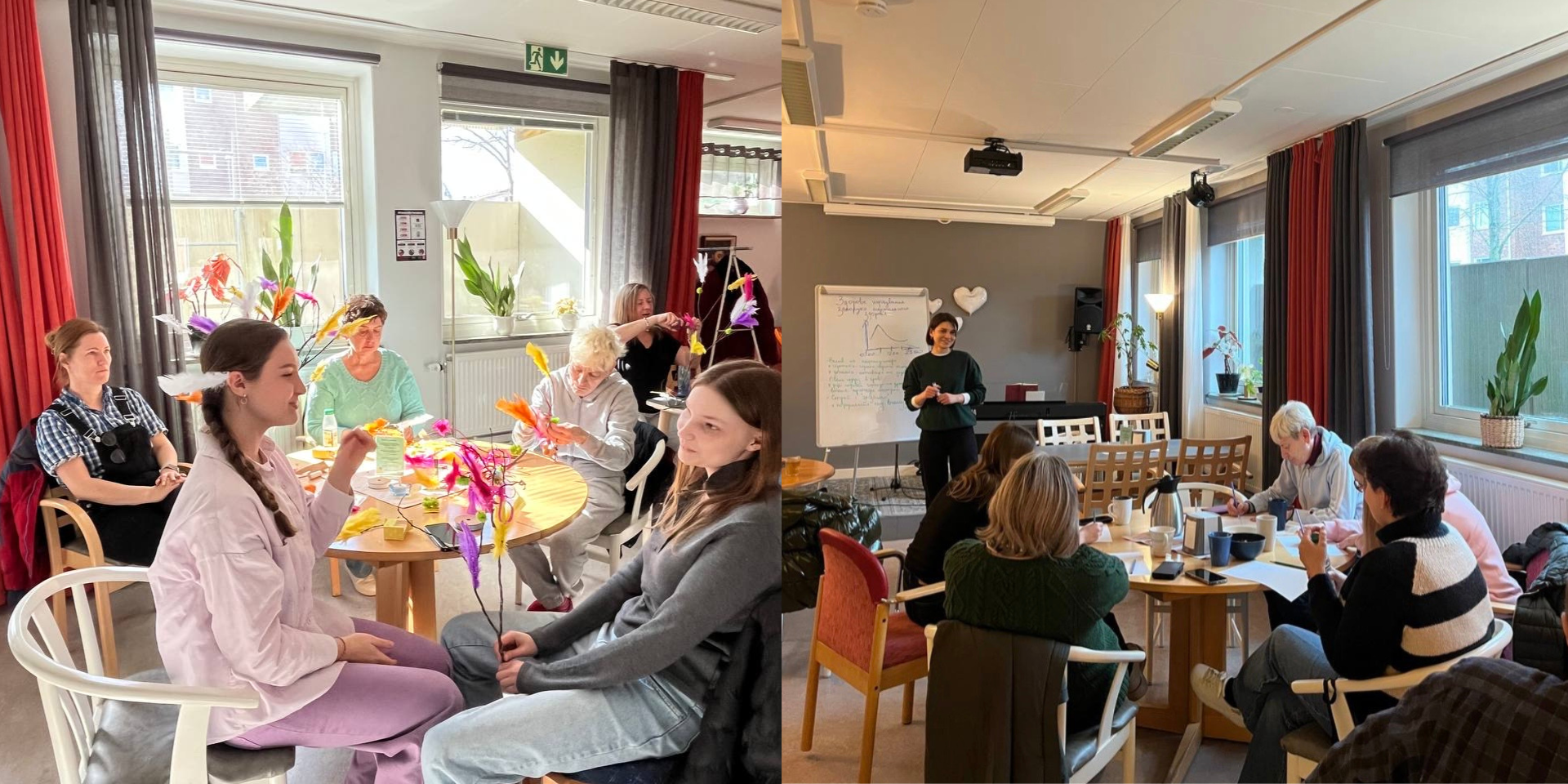
A TOIVO group meets 8 times, with each session focused on a different aspect of well-being — rest, positive emotions, nature, food, creativity, relationships, and more. Every meeting follows three simple steps: do something together, talk about how it felt, and take something small and practical away.
Importantly, the group isn't built around one-way teaching — it's built around participation. Each group chooses the themes most relevant to its participants, shaping the process together with the facilitator.
“It’s very difficult to find people you can speak your own language with, who have similar thoughts, similar views on life, and the same kind of experiences behind them. It’s also very difficult to organize your time on your own, because you’re always working, studying, running somewhere, doing something, you just don’t have time for it. That was the main thing that motivated me to join the project.” - Olesia, FRID participant
TOIVO is flexible and accessible — it can be adapted for different age groups and life situations. It is suitable for anyone who wants to strengthen their well-being, build new connections, or find a sense of community. At the same time, it is a strong example of community-led, low-threshold support, where participants are empowered to support one another in a safe and inclusive environment. Participants are actively involved in shaping the process — choosing topics, activities, and focus areas — which fosters a sense of ownership and empowerment. This approach lowers barriers to participation and helps build meaningful, locally rooted support networks.
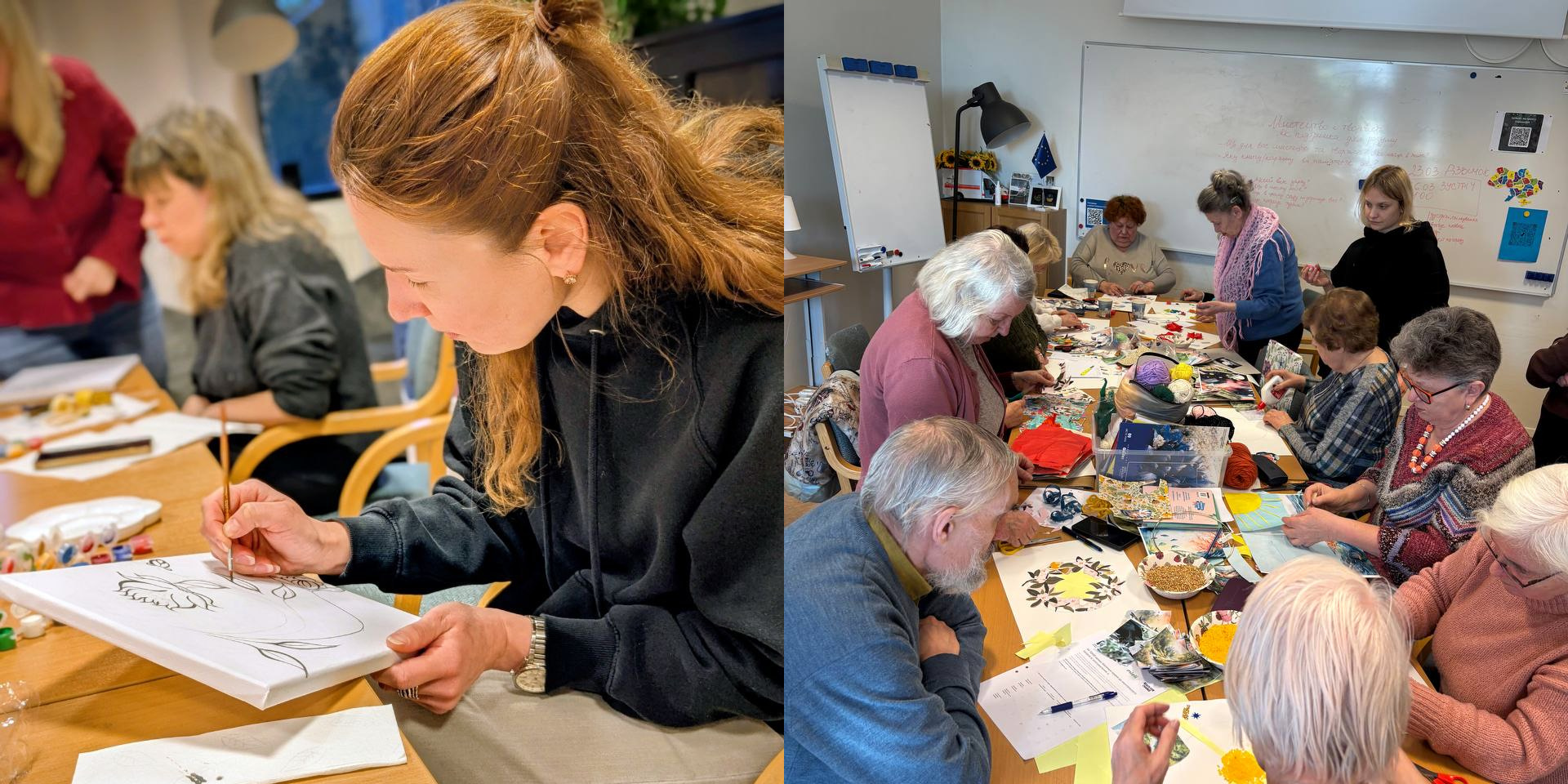
Because the same people return each time, trust builds gradually. Participants become more open, more present, and more willing to share honestly. By the end of the cycle, many groups have become small communities — some continue meeting long after the formal sessions end, organizing their own get-togethers and shared meals.
"The atmosphere in the group shifted gradually — meeting by meeting, trust grew, and so did a sense of belonging. By the end, participants were staying in touch, organizing their own get-togethers, and eventually hosting a massive farewell feast with dishes they'd all prepared themselves." — Kyrylo, TOIVO facilitator
Takeways
People who join TOIVO groups often describe that the meetings help them slow down and actually hear their own thoughts, noticing what they feel and why. Furthermore, many describe that connection with the group helps them to reconnect with a feeling of belonging to others as they seen and understood as they are.




