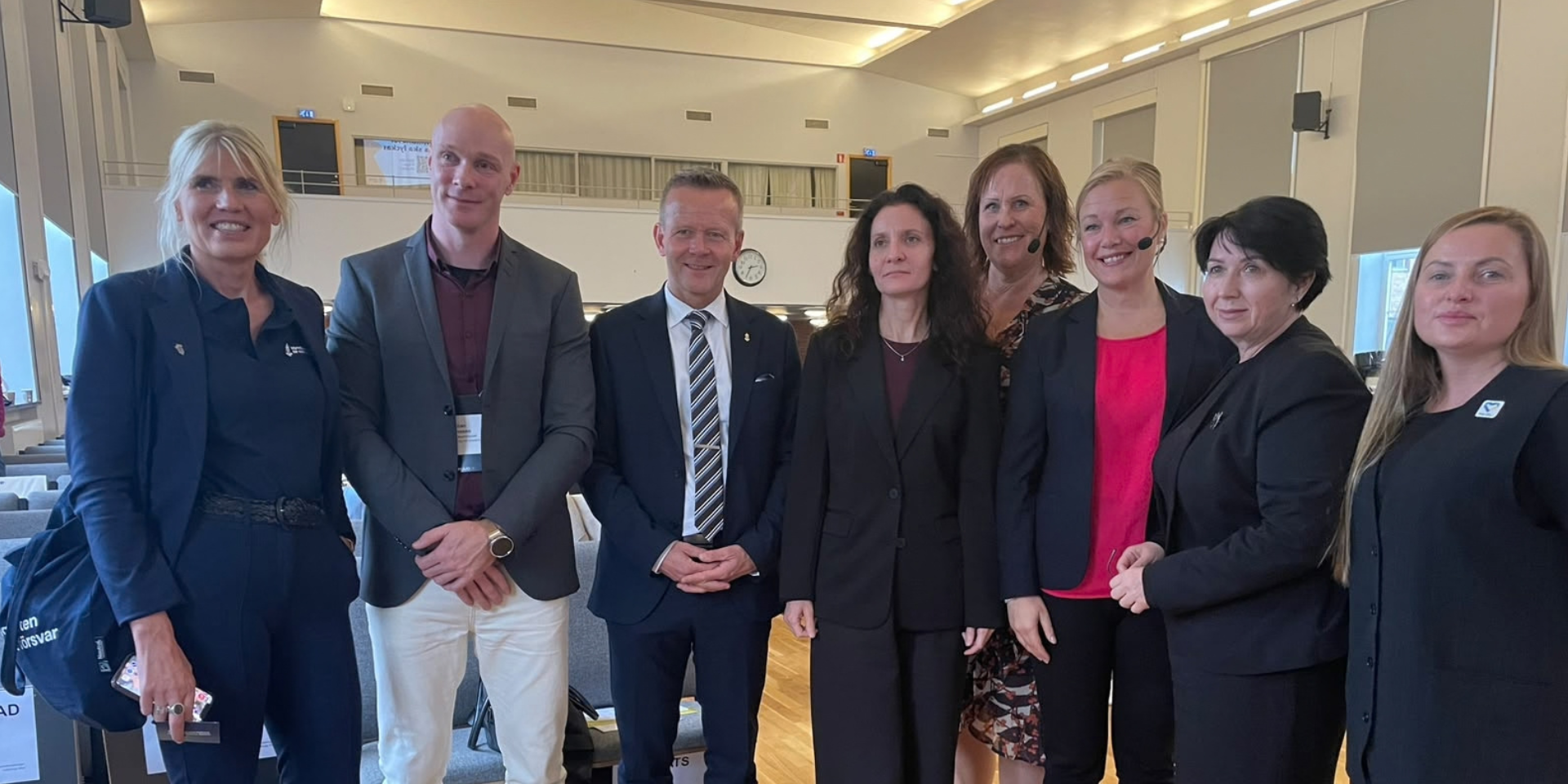
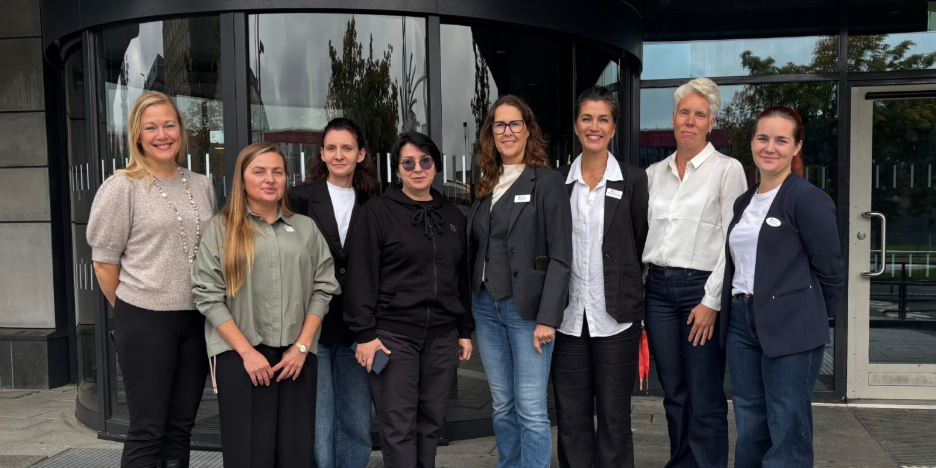
In September, Olena Lohoniuk, principal, and Nadiia Yantseva, deputy principal of Kryvyi Rih Lyceum #4, came to Gothenburg for Beredskapsveckan, the national preparedness week. They shared what it takes to keep schools running in wartime with Swedish professionals working on civil preparedness and total defence.
In Sweden, "total defence" is a topic that has returned to the national agenda after decades of lower priority. The country has not taken part in a war for more than 200 years. Now municipalities, schools and agencies are asking practical questions. What happens when the power goes out? How do you keep essential services running? How do you reach parents when normal routines stop working?
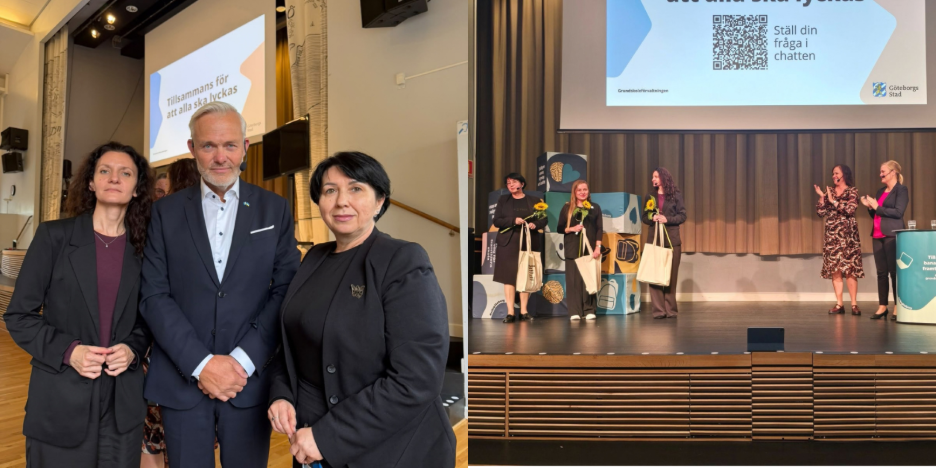
Together with Alla Tangstad, representative fro, HUG, the Ukrainian guests joined Göteborgs Stad's Chefsforum, a conference for Swedish school leaders with speakers including Jonas Attenius, Jan Eliasson, Mikael Frisell, Ida Texell, Kalle Sandhammar and Maria Andersson. The discussions moved from global developments to national and municipal perspectives, and finally to daily life in a school.
The following day, the conversation continued at Lundbyskolan with Annelie Börjesson and her colleagues Linnea Persson, Ellin Rosén and Marie Ahlén. The focus there was more practical: how a school keeps going when routines break down, how to organise communication, and how to act fast when the usual plan no longer works.
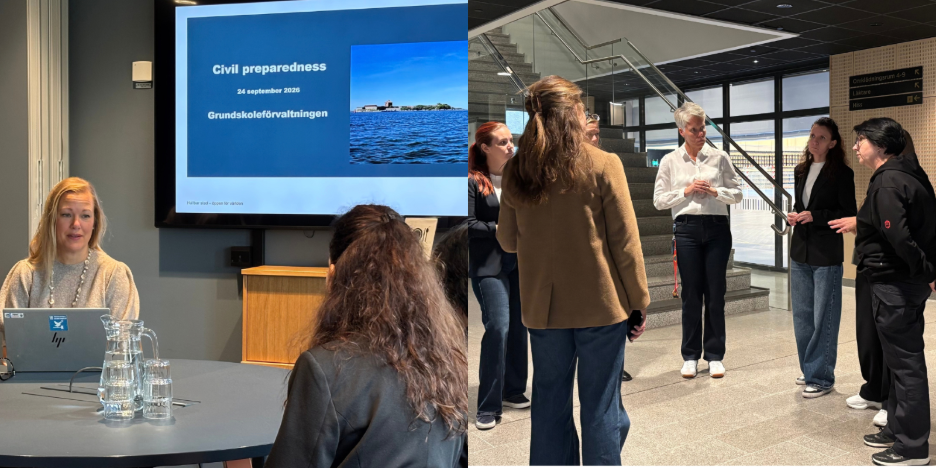
Annelie Börjesson, Security Development Officer at Göteborgs Stad's primary school administration, shared that the idea behind the day was to connect big-picture thinking with everyday reality. Preparing for the worst, she explained, also helps schools handle more likely disruptions such as extreme weather and long power cuts. And Sweden doesn't have to start from zero.
Ukrainian schools had to learn quickly: shelters, remote learning and psychological support for children became part of running a school.
"The most important things are the safety system and flexibility in how teaching is organised," Olena Lohoniuk says. "Ukrainian schools learned to adapt fast to crisis conditions. This is an experience worth passing on to our Swedish colleagues in the context of civil preparedness."
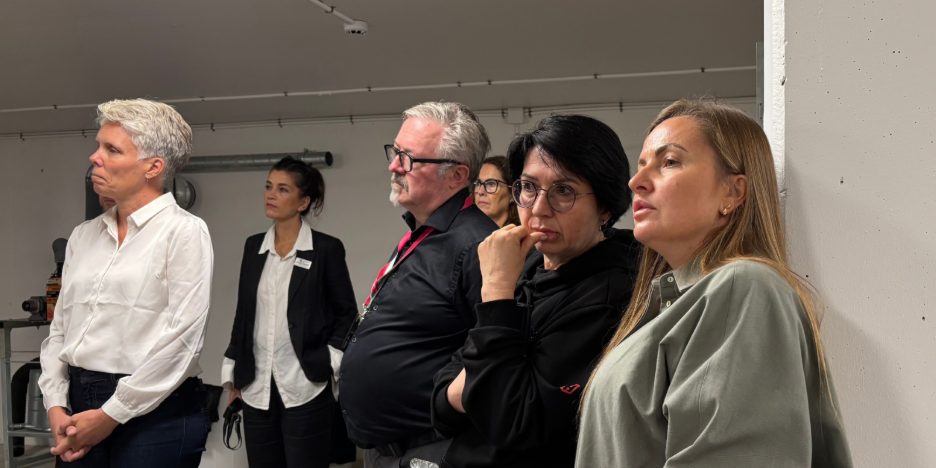
For the Ukrainian side, the exchange was just as valuable. Ukrainian schools can learn a lot from their Swedish colleagues, in particular their systematic approach to crisis management and their culture of students’ wellbeing.
"It showed me that safety isn't only about physical protection. It's also about creating an environment where a child feels calm and protected." - continues Olena.
The exchange was organised and facilitated by Help Ukraine Gothenburg (HUG), and is a part of a broader direction in the organisation's work: connecting people, expertise and experience across Ukraine and Sweden.
"Our role is not simply to bring people together, but to help turn Ukraine's practical experience into knowledge that responds to real needs in Sweden," says Alla Tangstad, project coordinator, HUG.
HUG identifies Ukrainian experts with relevant first-hand experience, connects them with Swedish colleagues and facilitates the exchange from start to finish. Strengthening Sweden's civil preparedness and total defence is one of the areas where Ukrainian experience can make the biggest difference right now.
"We see this as extremely important at this moment," Alla Tangstad says. "By sharing what we have learned, Ukraine and Sweden can strengthen each other and build more resilient societies."