Published:
September 1, 2026
In 2022, many Ukrainians came to Sweden with one thought in mind: this is temporary. They would stay safe, wait for the war to end, and return home. Four years later, that temporary reality has lasted long enough to become something else.
More than 60% of Ukrainians in Sweden have found some form of employment. Many have learned Swedish, started working or studying, and built everyday lives here. In other words, people have adapted to their new reality. But the conditions around them have not always adapted at the same pace.
For many Ukrainians, the future still comes with uncertainty:
How long can I stay? What should I plan for? Is it worth investing in education? Can I make long-term decisions about work, housing or my children’s future?
These questions may sound administrative. Their consequences are not.
Mental wellbeing is closely connected to our sense of stability, belonging and ability to plan our lives. Living with prolonged uncertainty can affect all three - especially when there is no clear timeline for when that uncertainty might end.
This is an area HUG has been working with since 2023. Through our mental health and community-based programmes, we have worked directly with Ukrainians experiencing uncertainty, isolation and difficulties with integration.
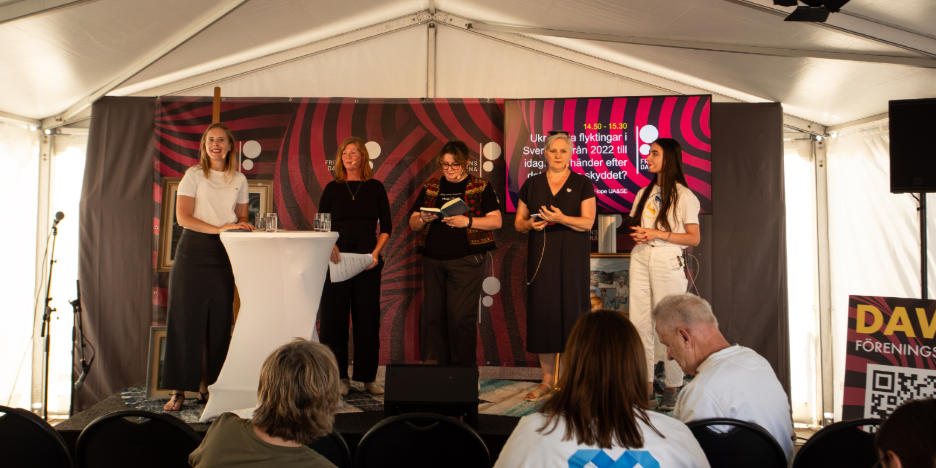
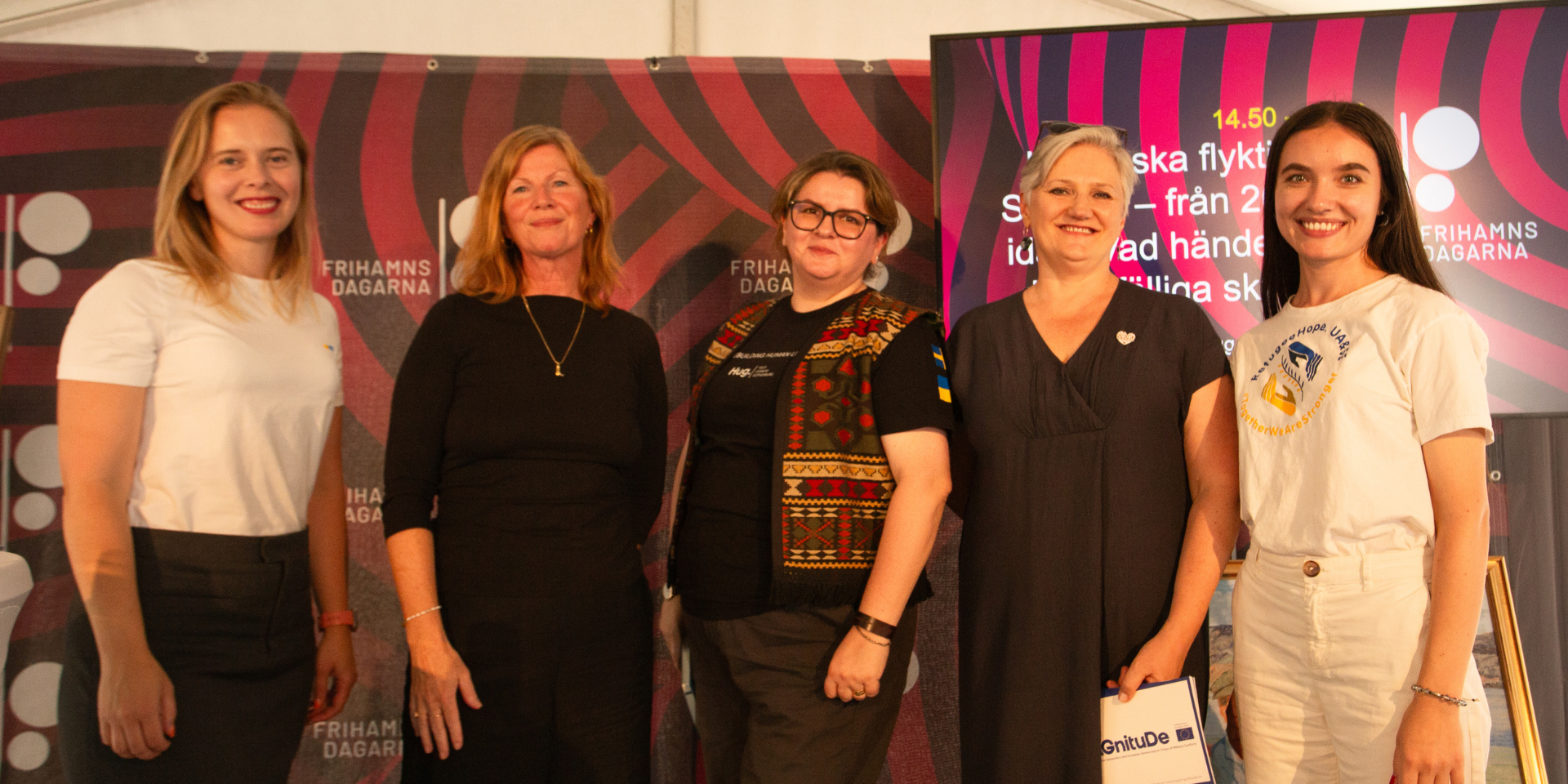
At Frihamnsdagarna, HUG co-founder Kateryna Aleksandrova brought this practical experience into a wider conversation, joining Veronica Liliedahl, Oksana Shmulyar Gréen, Khrystyna Hevchuk and Nataly Lamkén to discuss what prolonged uncertainty means for Ukrainians in Sweden.
The discussion explored how uncertainty affects wellbeing, how integration challenges can add to mental health pressures, and how different rules and circumstances shape people’s lives depending on when they arrived.
For HUG, taking part in conversations like this is an opportunity to bring the experience from our programmes and work with communities into a broader public dialogue — connecting what we see on the ground with research, policy and lived experience.
When a temporary situation lasts for years, it is no longer enough to ask how people are coping with it. We need to ask whether the systems around them are keeping pace with the lives they are already building.
Thank you to everyone who joined us at the discussion, and to Frihamnsdagarna for creating space for this conversation.


.png)

