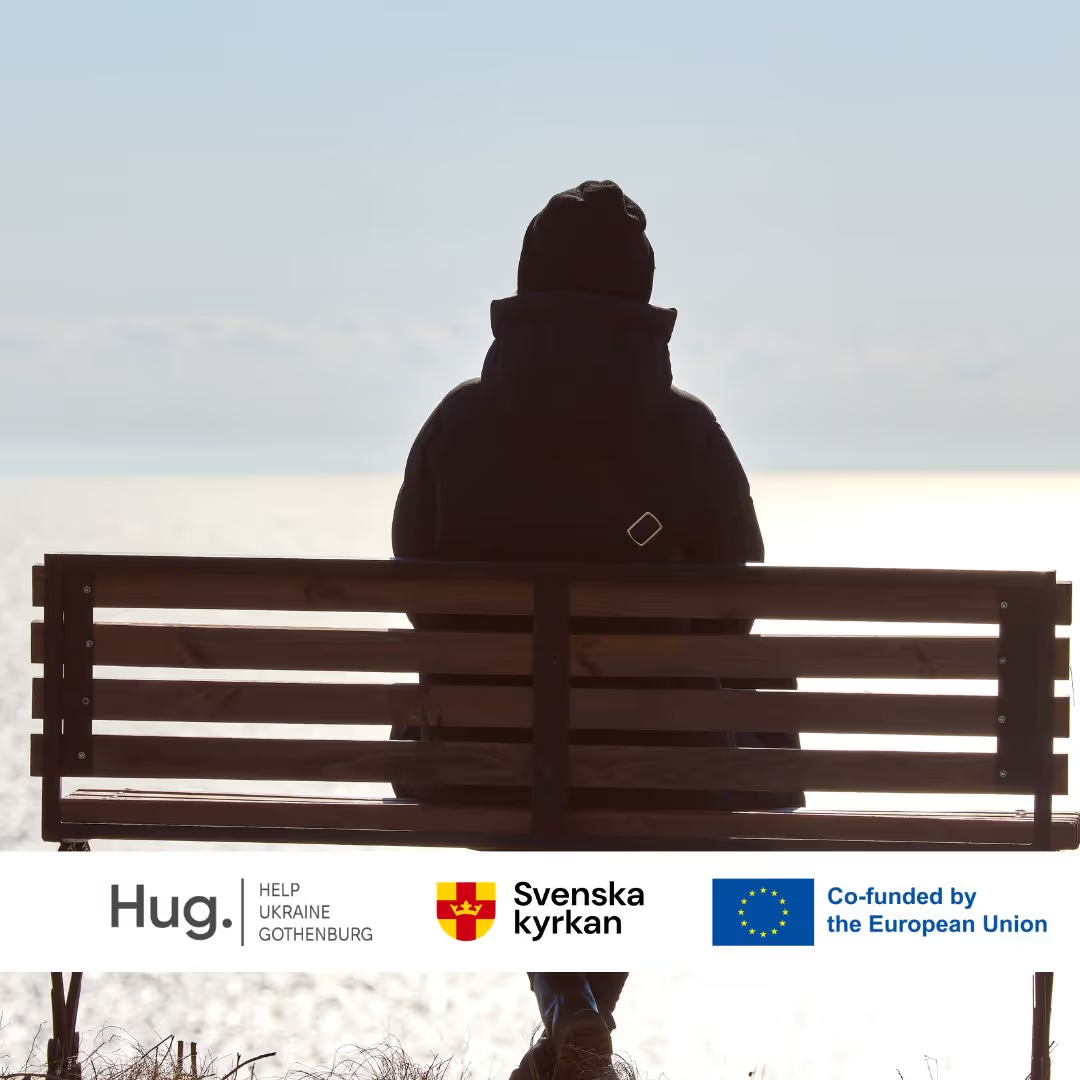
Forced migration is often accompanied by a feeling of loneliness, even when there are people around, a job, or studies. It is an experience that is rarely talked about. Here you will find information about the psychological mechanisms of loneliness and simple ways to support yourself.
Loneliness does not mean the absence of people. It is about the absence of emotional resonance — the feeling that you are not seen or understood, a lack of genuine closeness. You can have a family and still feel lonely, or live among people and feel isolated.
In migration, loneliness is intensified by the loss of a familiar social circle, language barriers, cultural differences in closeness and communication, experiences of war, loss and trauma, and changes in roles and status (identity transformation).
There are different types of loneliness, including:
Loneliness is a signal from the brain’s safety system. When social connection is lacking, the threat system (amygdala) is activated, cortisol (stress) levels increase, and the brain shifts into hypervigilance. Social signals may be perceived as rejection or danger. For the brain, social connection is a survival resource — just like basic needs such as food and sleep.
A sense of belonging is a basic need of the nervous system. Without the feeling of “I belong,” anxiety increases, self-worth decreases, shame appears, and fear of rejection is activated. Loneliness often disguises itself as fatigue, irritation, apathy, or self-devaluation.
It is important to seek professional help if loneliness lasts for months and intensifies, interest in life decreases, feelings of hopelessness appear, or daily functioning becomes difficult (cooking, making the bed, etc.).
Loneliness is a normal and human response to adaptation and loss. It signals the need for new forms of connection and support.
The Empower HUB project is implemented by HUG and partners. Co-funded by the European Union through the Asylum, Migration and Integration Fund (AMIF).
We gather the most essential news and step-by-step guides to help you feel confident in Sweden. Discover your rights, obligations, and opportunities for personal and professional growth all in one place.


